
Last updated October 16, 2026
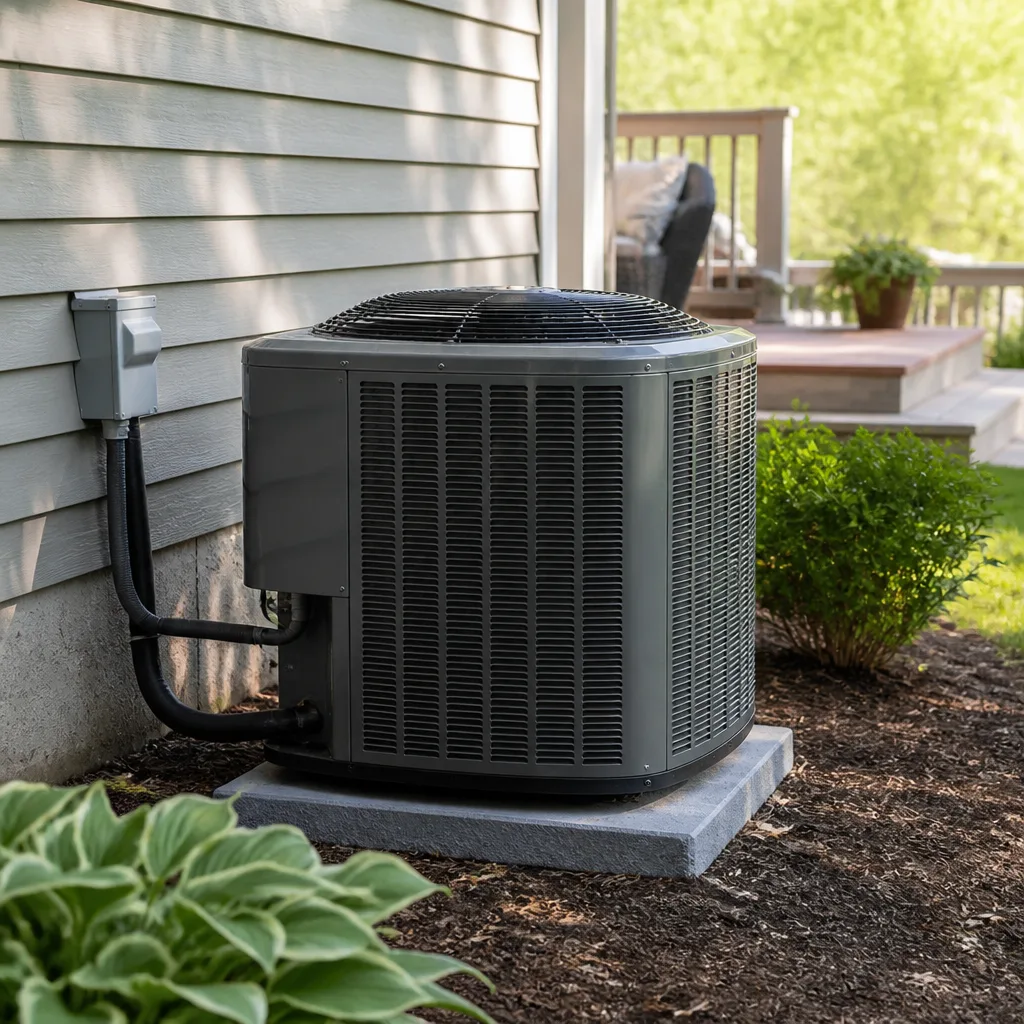 AC repair
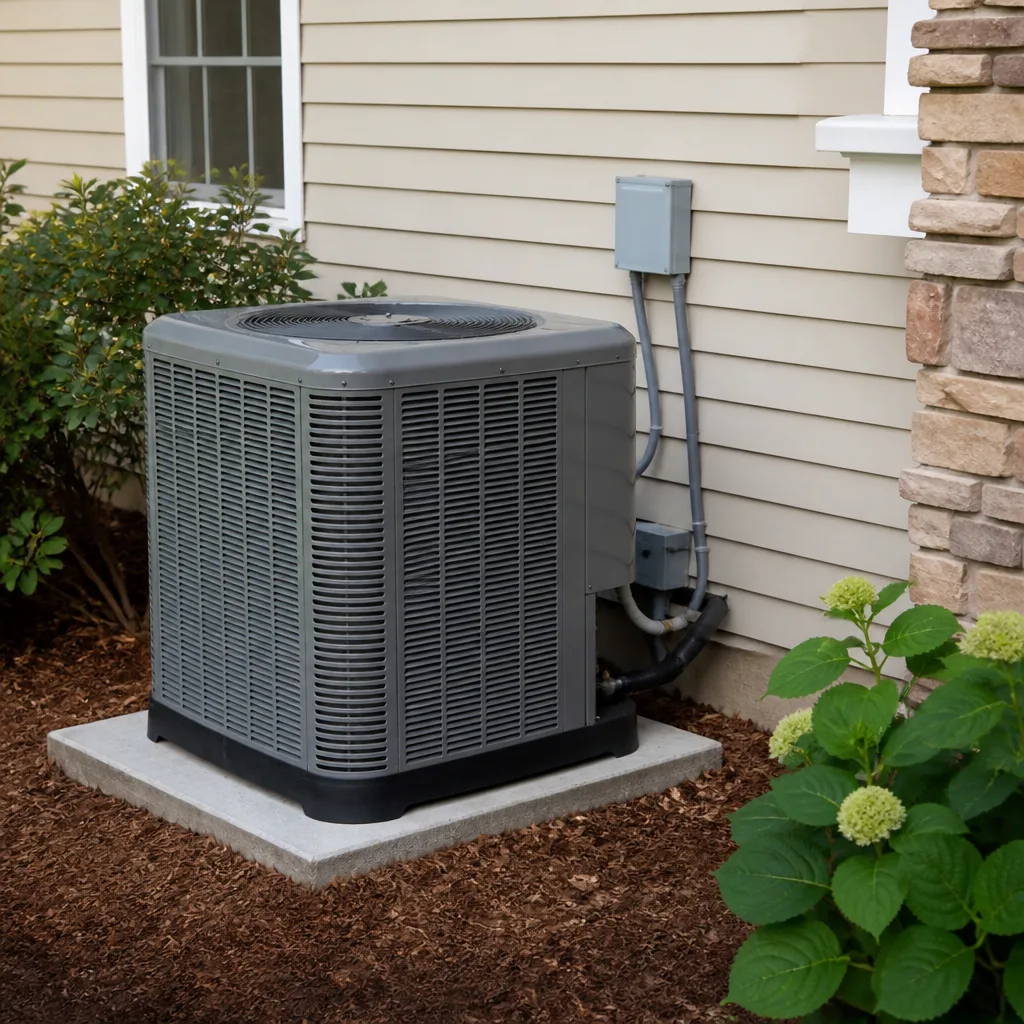 Furnace & heating
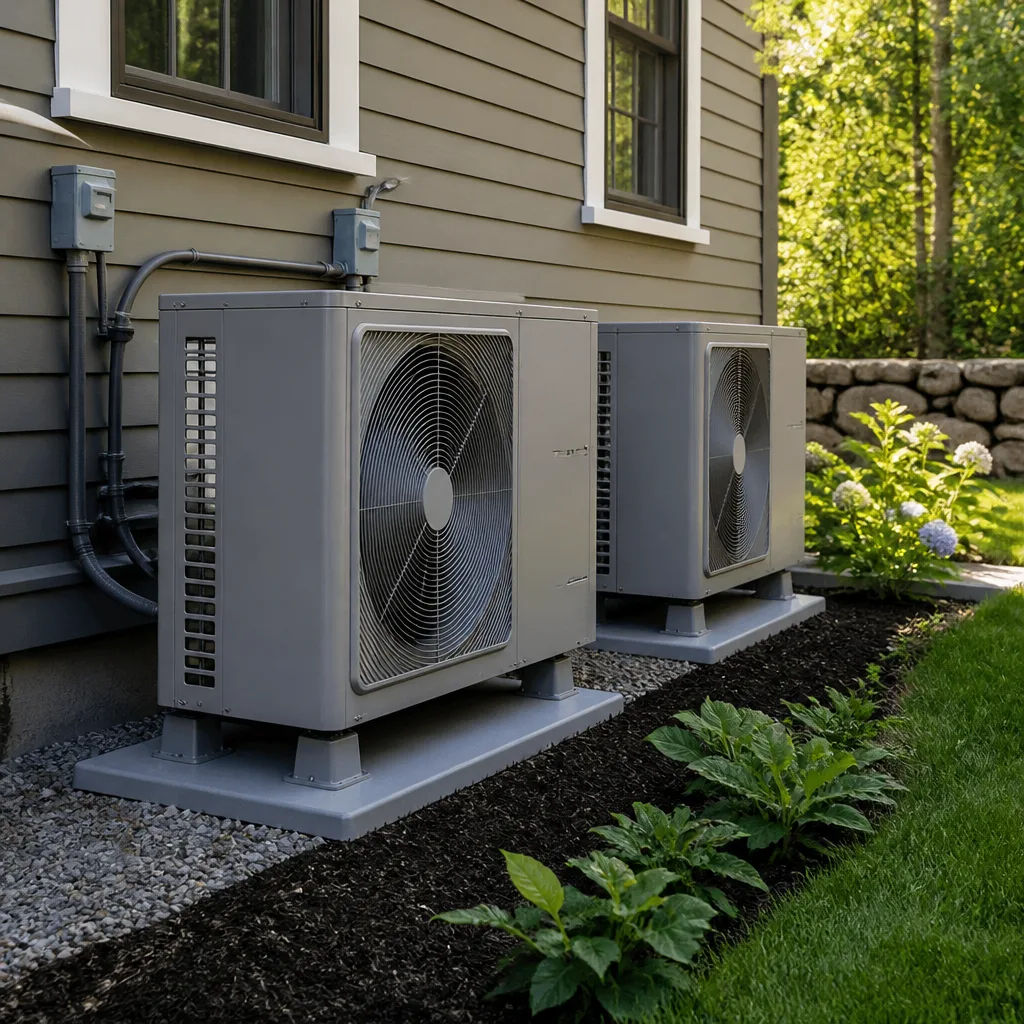 Heat pumps
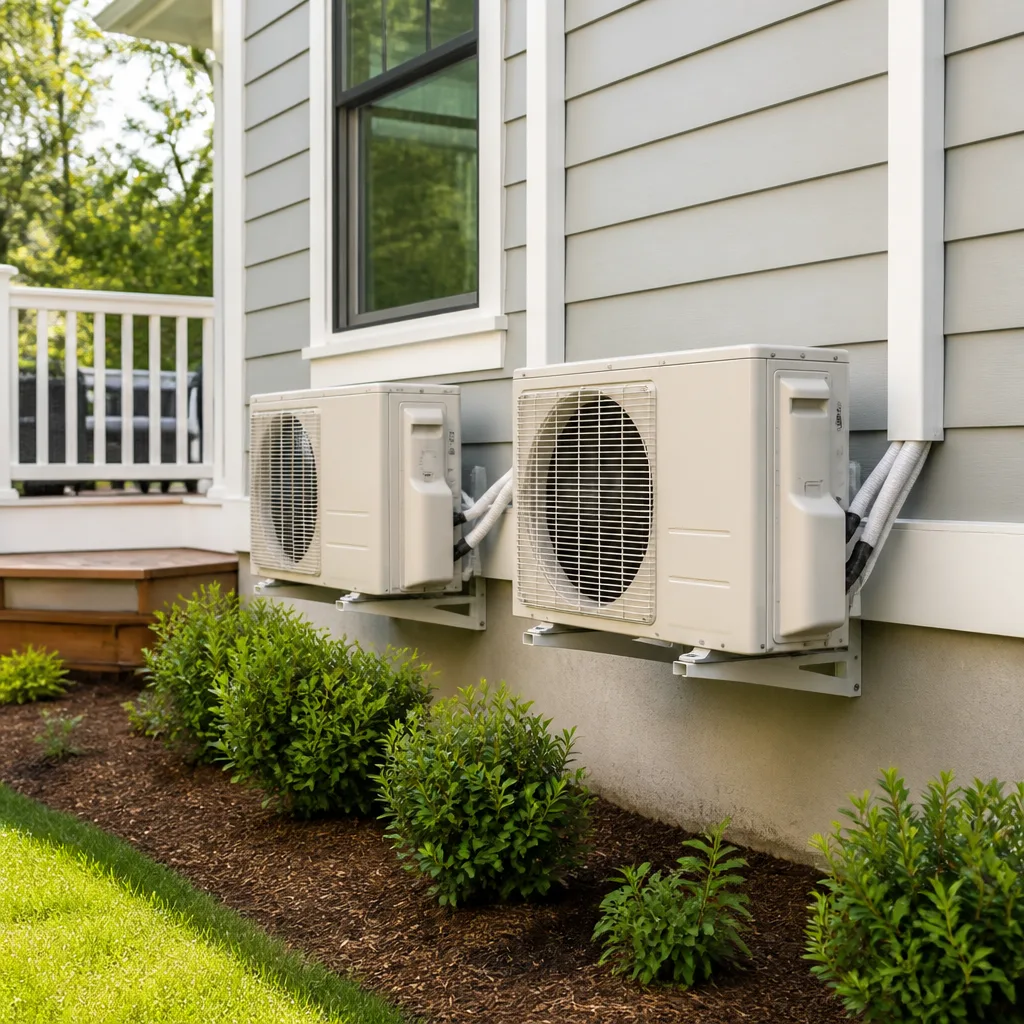 Ductless mini splits
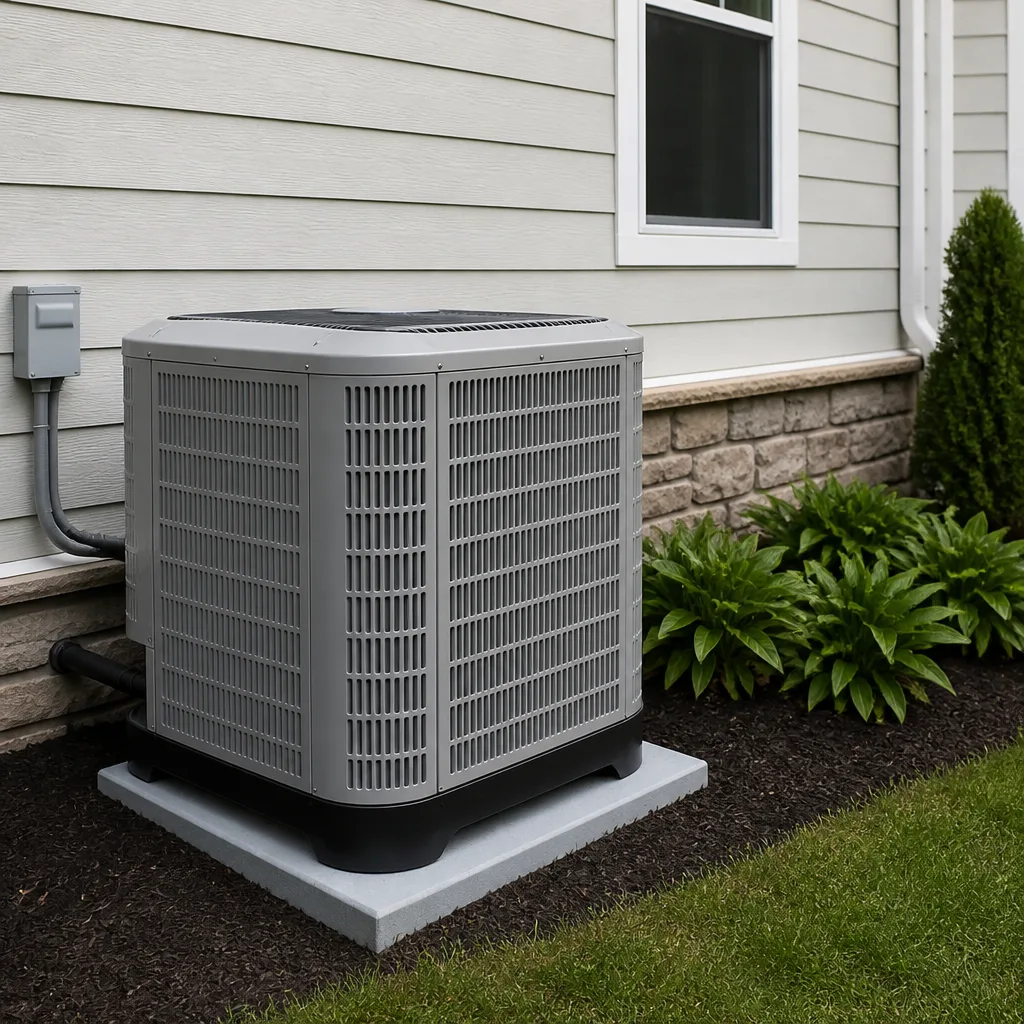 Carrier
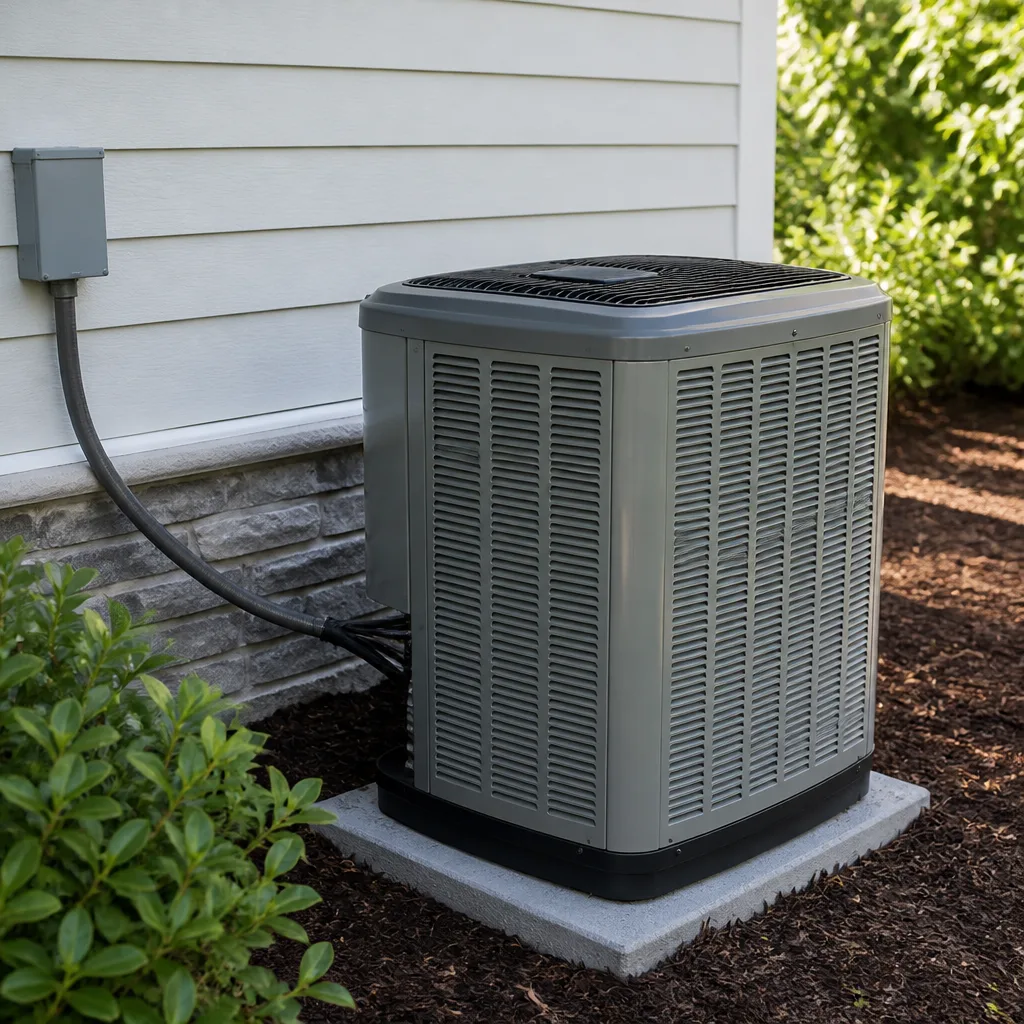 Trane
Trane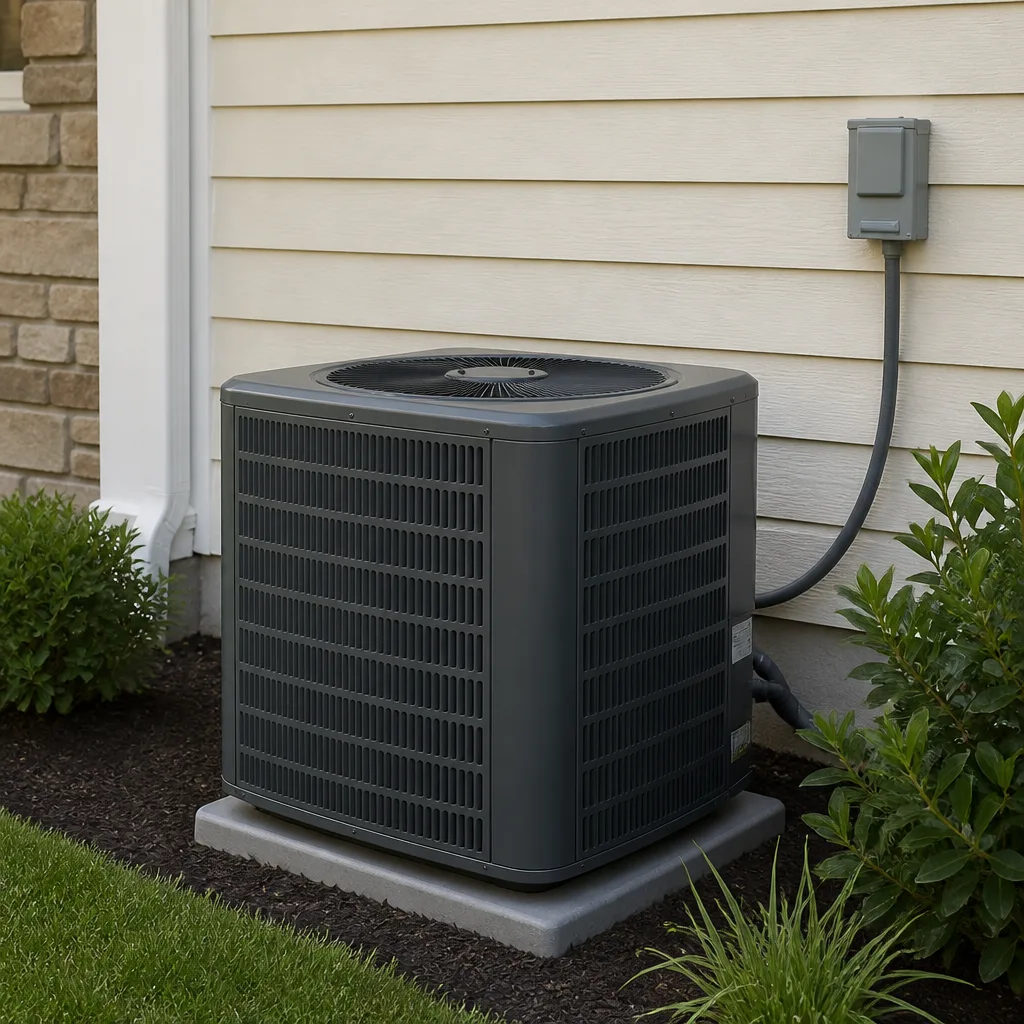 Goodman
Seasonal tune-up and full diagnostic on your Carrier, Trane, or Goodman system - readings shown to you before any repair is proposed
Diagnosis first, numbers second - you approve the repair price before a single part goes in.
Get your free estimateThe Complete Guide to HVAC in Las Vegas
A standard HVAC system rated for a 95°F design day is technically undersized for Las Vegas before it ever turns on. Most national buying guides quietly skip design-day temperature, which means a homeowner in Henderson or Summerlin can follow all the usual advice and still end up with a system that overheats, short-cycles, and dies years early. This guide treats the Mojave desert as what it actually is: an engineering constraint, not a weather footnote. You’ll learn how Las Vegas sizing math differs from Phoenix or Dallas math, why rooftop units dominate this city’s neighborhoods, what caliche soil and hard water do to your coil, and what a 14 SEER versus 18 SEER unit really costs to run when the cooling season starts in April and doesn’t end until late October.
Styles & brands we work with
Quick Answer
The complete picture of HVAC in Las Vegas comes down to this: your system must be sized for a 115°F outdoor design temperature, not the 95°F standard used in much of the country. Most homes here use rooftop packaged units rather than the split systems common back East, and the desert’s hard water and caliche soil wear down coils and drain lines faster than anywhere else in the Southwest. A properly sized, well-maintained system in Clark County should last 12 to 15 years, and the smartest upgrade for most Las Vegas homeowners is moving from a 14 SEER to an 18 SEER unit, which can cut cooling-season electrical costs by roughly 25 percent.
Table of Contents
- Why 115°F Changes Everything: Design Temperature and Load Calculations
- Rooftop Packaged Units: Las Vegas’s Default HVAC Configuration
- Caliche Soil, Hard Water, and the Corrosion Problem
- 14 SEER vs. 18 SEER: The Real Math for Las Vegas Cooling Hours
- Nevada State Contractors Board Licensing: What the Classes Actually Mean
- Maintenance in the Mojave: What Actually Needs Doing and When
- When to Repair vs. Replace in Las Vegas
- Common Mistakes to Avoid
- When to Call a Professional
- Frequently Asked Questions
- The Bottom Line
Why 115°F Changes Everything: Design Temperature and Load Calculations
Design temperature is the outdoor air temperature a system is engineered to handle on the hottest expected day of the year. Most national equipment ratings assume a 95°F design day. Las Vegas’s outdoor design temperature, per ACCA Manual J methodology, is 115°F. That 20-degree gap is not a clerical detail. It changes the tonnage required, the airflow needed, the duct sizing math, and the strain on the compressor every single afternoon from June through September.
ACCA Manual J is the load calculation standard that reputable HVAC contractors use to size equipment. It accounts for square footage, ceiling height, window orientation, insulation levels, number of occupants, and outdoor design temperature. Skip it and you get rule-of-thumb sizing, which in Las Vegas usually means one of two outcomes: an undersized system that runs all day and never reaches the thermostat setpoint on a 112°F afternoon, or an oversized system that short-cycles, fails to dehumidify, and wears down the compressor prematurely.
Systems sized for other Sun Belt cities still fall short here. A unit specified for Phoenix’s 108°F design day will struggle in a west-facing Summerlin home with vaulted ceilings and unshaded windows. That’s why we run a full Manual J load calculation on every AC Installation in Las Vegas. It’s not negotiable. The calculation also reveals when an existing system is simply too small for the thermal load, which happens more often than most homeowners realize, especially in older neighborhoods like Paradise Palms or Charleston Heights where homes predate modern energy codes.
What a Manual J Calculation Actually Includes
- Outdoor design temperature for the home’s specific Las Vegas valley location (115°F summer, 32°F winter)
- Square footage of each conditioned room, not just the house as a whole
- Ceiling height and volume, because high ceilings in newer builds change the cooling load significantly
- Window size, type, and compass orientation (west-facing glass is the biggest cooling penalty in this city)
- Insulation levels in the attic, walls, and floor
- Number of occupants and typical daytime occupancy patterns
- Duct leakage estimates, which matter more in Las Vegas attics than almost anywhere else
- Internal heat sources: ovens, dryers, server equipment, and so on
You cannot get this done properly by phone or by looking at the old unit’s label. A thorough load calculation requires time at the house. Contractors who quote a replacement without one are guessing, and in this climate, guessing wrong costs tens of thousands of dollars over the life of the system. For more on vetting installers, see our guide on How to Hire a HVAC Contractor in Las Vegas: A Step-by-Step Guide.
Rooftop Packaged Units: Las Vegas’s Default HVAC Configuration
The majority of single-family homes in Las Vegas use rooftop packaged units, not the split systems common in the Midwest and East Coast. A packaged unit puts the compressor, condenser, evaporator coil, and blower in one metal cabinet on the roof. A split system separates the condenser outside and the evaporator coil indoors. Why does Las Vegas favor rooftops? Because most homes here were built as slab-on-grade ranches without basements or crawlspaces, so there is no convenient interior utility closet for an air handler. The roof gets the equipment out of the way, and it works reasonably well in a climate where freezing temperatures are rare.
That rooftop placement changes maintenance in ways homeowners from other states never face. Access means a ladder, a qualified technician, and the right safety gear. Rooftop units also bake in direct summer sun, which means the cabinet and the components inside run hotter than a ground-level condenser ever would. That accelerates capacitor failures, contactor wear, and compressor fatigue. A rooftop unit in Summerlin operates in ambient roof temperatures that can exceed 140°F in July. That is a different universe of thermal stress.
Replacement parts for rooftop packaged units are generally available in Las Vegas because the configuration is so common, but the work itself takes longer and costs more than a simple condenser swap. When you schedule AC Repair in Las Vegas, expect the technician to spend time on the roof, checking not just the electrical and refrigerant circuits but also the drain pan, the heat exchanger if it’s a gas-pack, and the duct connections where they meet the unit. Rooftop units in this city leak ducts at the roof curb more often than homeowners realize, and that leaked air is expensive.
Caliche Soil, Hard Water, and the Corrosion Problem
Clark County sits on caliche, a hard, calcium-carbonate-rich soil layer that forms a kind of natural concrete just below the surface. That soil chemistry leaches into the water supply. Las Vegas tap water is among the hardest in the country, typically running 16 to 20 grains per gallon. For your HVAC system, hard water means two specific problems: condenser coil corrosion and drain line calcification.
Condenser coil corrosion happens when hard water from sprinklers repeatedly hits the outdoor coil. Las Vegas landscaping often throws spray directly at the side of the house where the condenser sits. That mineral-laden water dries on the coil fins, leaves behind scale, and gradually eats into the aluminum. The result is a coil that loses heat-transfer efficiency year after year, which forces the compressor to work harder and run longer. Homeowners in other states face this too, but the combination of extreme heat and extreme water hardness accelerates it here.
Drain line calcification is even more common. Your air conditioner pulls moisture out of the air (yes, even in a dry climate, there is condensation during the humid monsoon weeks of July and August). That condensate flows through a drain line. When the water already carries dissolved calcium, the inside of that drain line slowly narrows as scale builds up. A clogged drain line trips a float switch, which shuts the system down, and suddenly your AC is dead on the hottest weekend of the year. We clear more calcified drain lines in Las Vegas than any other single maintenance issue between July and September.
How to Protect Your System From Hard Water Damage
- Direct sprinklers away from the condenser unit, or install a drip-irrigation conversion for landscaping near the equipment pad
- Flush the condensate drain line every spring with a mild cleaning solution, or have it done during a spring tune-up
- Check the drain pan for white mineral deposits each time you change the air filter
- Schedule a coil cleaning at least once every two years, more often if you live near a golf course or construction site
Ignoring these steps does not just shorten equipment life. It voids manufacturer warranty coverage in some cases, because the damage is classified as environmental neglect. The fix is cheap. The consequences are not.
14 SEER vs. 18 SEER: The Real Math for Las Vegas Cooling Hours
SEER is Seasonal Energy Efficiency Ratio, and it measures how many BTUs of cooling a system produces per watt-hour of electricity consumed. A 14 SEER unit produces 14 BTUs per watt. An 18 SEER unit produces 18. The higher number is better, but the real question is whether the upfront price difference pays for itself. In Las Vegas, the answer is usually yes, and here is the actual math.
A typical 2,000-square-foot home in Las Vegas needs about 3.5 to 4 tons of cooling. A 14 SEER 3.5-ton unit consumes roughly 3,000 watts per hour of operation. An 18 SEER unit of the same capacity consumes about 2,333 watts per hour. Las Vegas sees between 2,500 and 3,000 cooling hours per year, depending on the spring and fall shoulder seasons. That means the 14 SEER unit uses about 7,500 to 9,000 kWh per year for cooling, while the 18 SEER unit uses 5,800 to 7,000 kWh. At the current average NV Energy rate of around $0.14 per kWh, that is $1,050 to $1,260 per year for the 14 SEER unit versus $812 to $980 for the 18 SEER unit. The annual savings run $240 to $280, and over a 12-year lifespan, that’s roughly $2,900 to $3,300 in electrical costs, before any rate increases.
The typical upfront price difference between a 14 SEER and 18 SEER unit in Las Vegas, installed by a licensed contractor, is $1,500 to $2,500. That means the efficiency upgrade pays for itself in about six to nine years, and after that it is pure savings. For a detailed breakdown of where those numbers come from, see our HVAC Cost Breakdown: The Las Vegas Homeowner’s Reference for 2026. When you pair an 18 SEER unit with a variable-speed blower, the comfort improvement is substantial: longer, quieter run cycles that hold a steadier temperature and pull more moisture out of the air during monsoon weeks.
What Influences Real-World Savings
- Thermostat setpoint: The savings assume a 78°F summer setpoint. If you hold 72°F, both units run more, and the absolute savings widen.
- Home insulation: A well-insulated attic multiplies the benefit of the higher SEER rating.
- Duct condition: Leaky ducts waste efficiency regardless of equipment rating.
- Utility rate changes: NV Energy rates have trended upward, which makes high-SEER equipment more valuable over time.
For most Las Vegas homeowners replacing a unit that is 12 years old or older, stepping up from base-efficiency 14 SEER to 17 or 18 SEER is the single best long-term financial decision in the entire HVAC conversation. The brands we install most often for that upgrade path include Rheem and Daikin, both of which hold up well in this climate when maintained properly.
Nevada State Contractors Board Licensing: What the Classes Actually Mean
The Nevada State Contractors Board issues licenses by classification, and the class matters more than most homeowners realize. HVAC work in Nevada falls under the C-21 classification, which covers refrigeration and air conditioning. A C-21 license holder may install, modify, and repair HVAC equipment. That sounds comprehensive, but the scope of what a C-21 contractor can legally do varies based on their specific license limits, which include monetary limits and sometimes sub-specialty restrictions.
Before you let anyone touch your system, you can verify their license status on the Nevada State Contractors Board website. It takes two minutes. What you should look for: an active C-21 license, no open disciplinary actions, and bonding in good standing. A valid contractor bond exists to protect homeowners if the work is abandoned or done improperly. If a company says they are insured but cannot produce a license number that checks out, do not use them. It’s that simple.
You’ll also see C-1 licenses in related fields, which cover plumbing and heating, and some contractors hold both. That’s useful when your rooftop gas-pack needs furnace work alongside AC work, because not every C-21 shop is legally permitted to service the gas side of a packaged unit. Our own technicians carry the qualifications needed to work on both the cooling and the gas-heating side of rooftop packages, which matters because most Las Vegas homes heat and cool with the same rooftop cabinet. When the Furnace Repair in Las Vegas involves a gas-pack on the roof, you want one licensed contractor handling the whole unit, not a handoff between two companies.
Licensing is the floor, not the ceiling. It tells you the contractor is legally permitted to work. It does not tell you whether they will show up on time, quote a fixed price in writing before touching anything, or stand behind the repair if it fails. Those are the promises that separate a baseline licensed contractor from one you’ll actually recommend to a neighbor.
Maintenance in the Mojave: What Actually Needs Doing and When
Standard national maintenance advice says to change your filter every 90 days and get a tune-up twice a year. In Las Vegas, that advice is insufficient. Here is the maintenance rhythm that actually protects equipment in this environment.
- Filter changes: every 30 to 45 days during peak cooling. Dust from the Mojave, combined with the system running 12 to 16 hours a day, loads up filters fast. A clogged filter reduces airflow, freezes the evaporator coil, and shortens compressor life.
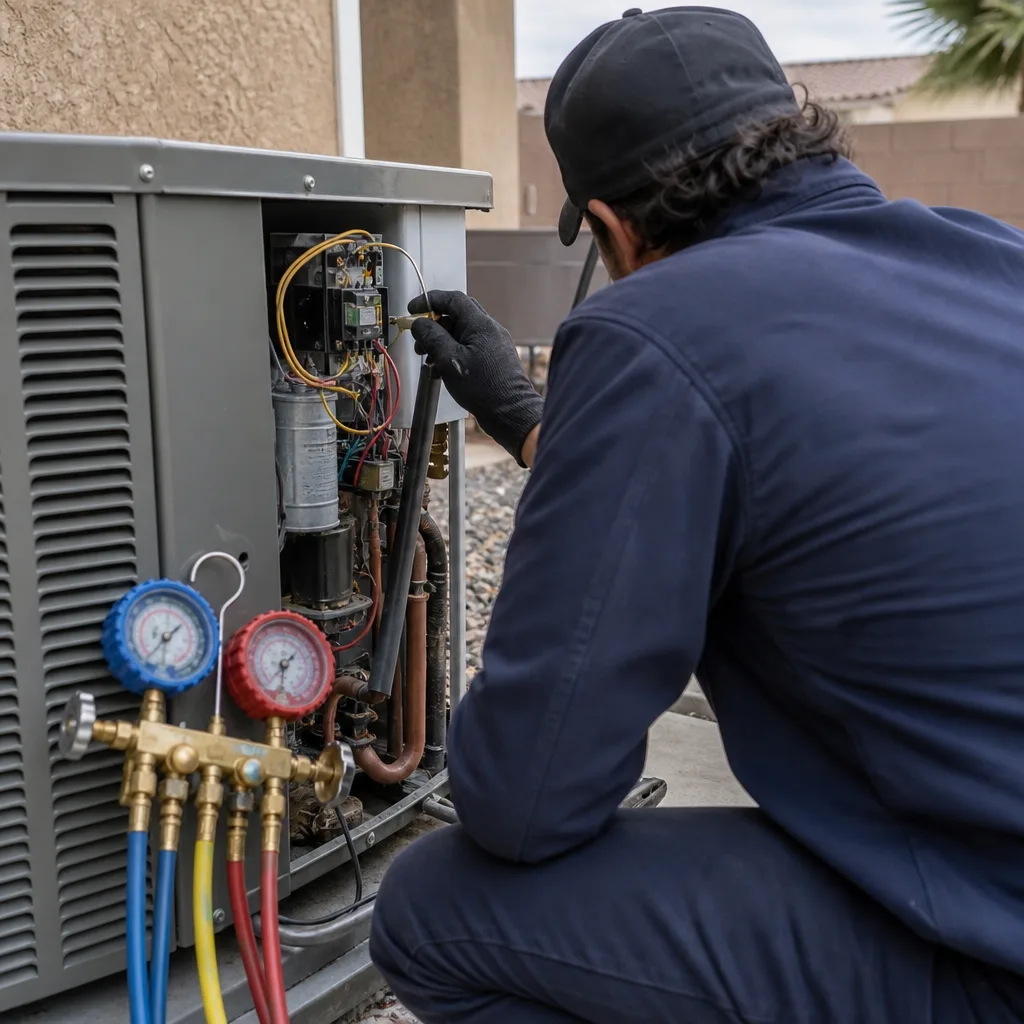
- Spring tune-up: March or April. Before the first big heatwave, a technician should check refrigerant charge, capacitor condition, contactor wear, coil cleanliness, drain line flow, and thermostat calibration. This is the appointment that prevents the June 15 emergency breakdown.
- Fall heating check: October or November. Gas-pack heat exchangers need inspection for cracks, and burners need cleaning. Ignition components fail quietly, and you don’t want a no-heat situation on a 35°F January morning.
- Coil cleaning: every two years, or annually near construction. Fine dust coats condenser coils and reduces efficiency. A dirty coil can raise energy use by 10 to 15 percent without any visible symptom.
- Duct inspection: every five years. Rooftop duct connections loosen over time from thermal expansion and wind. We regularly find 20 to 30 percent leakage in homes that have never had ducts checked.
Maintenance is also where the free second visit promise matters. When a repair has been made and the same problem recurs within the coverage window, a written guarantee means the return visit is at no charge. Not every company in Las Vegas offers that. We put it in writing on every repair we complete, because a guarantee that does not include the return trip is just a sentence.
When to Repair vs. Replace in Las Vegas
The repair-versus-replace decision in Las Vegas is driven by three factors: the age of the system, the cost of the repair relative to replacement, and the condition of the supporting pieces, especially the ducts and the roof curb. Not sure whether to fix it yourself or call a pro? Read our DIY vs Professional HVAC: The Las Vegas Homeowner’s Decision Guide. The general rule we use: if the repair cost exceeds 30 percent of what a replacement would cost, and the system is more than 10 years old, replacement starts to make financial sense.
A rooftop packaged unit in this climate has a working life of 12 to 15 years when maintained. Past year 12, compressor failures become more likely, and the costs stack up. Paying $2,000 for a compressor replacement on a 13-year-old rooftop unit usually does not make sense if the heat exchanger, blower, and duct connections are all aging with it. That money is better applied to a new unit with a fresh warranty and meaningfully higher efficiency.
There are exceptions. A five-year-old unit with a failed capacitor is a straightforward repair. A two-year-old Coil with a refrigerant leak should be repaired under warranty. But when the system is old enough that you are planning repairs around it, rather than scheduling them, it is time to have the replacement conversation. Get a written quote for the replacement before you commit to the repair. Then compare. The numbers usually tell you what to do.
Common Mistakes to Avoid
- Sizing by square footage alone. The old “500 square feet per ton” rule was never accurate, and in Las Vegas with its 115°F design day and western sun exposure, it’s actively harmful. A Manual J calculation is the only defensible method.
- Ignoring the drain line until it floods. Hard water calcification is slow and silent. By the time the float switch trips, the line is fully clogged and your AC is off. A spring drain line flush is a fraction of the cost of an emergency visit.
- Replacing a rooftop unit without inspecting the curb and ducts. A new high-efficiency unit connected to leaky 20-year-old ducts delivers about half its rated efficiency. We see this in older Green Valley and Sunrise Mountain homes all the time.
- Choosing the lowest bid without checking licensing and bonding. An unlicensed installer may save you $800 up front and cost you $8,000 when the roof leaks or the unit fails and there is no board to file a claim against.
- Deferring maintenance on a system that runs 2,800 hours a year. A system in Minneapolis might run 800 cooling hours. Yours runs triple that. Maintenance cannot be treated as optional.
- Setting the thermostat to 68°F on a 115°F day and expecting the AC to keep up. A properly sized system maintains about a 20-to-25-degree difference from outdoor temperature. On the hottest afternoons, 78°F indoors is realistic. Demanding 68°F freezes coils and kills compressors.
When to Call a Professional
Call a licensed HVAC contractor when you notice warm air blowing from the vents while the outdoor unit runs, when the system short-cycles (turns on and off repeatedly without reaching setpoint), when you hear grinding, hissing, or banging from the rooftop unit, when the thermostat shows an error code, or when water is dripping from the ceiling near the equipment. Call the same day you notice these symptoms, because a small problem left alone in this climate becomes a big one quickly. Call immediately when the AC fails entirely during a heat advisory, which is a health risk for older adults, young children, and people with respiratory conditions.
For anything beyond filter changes and visible debris clearing, rooftop work in Las Vegas belongs to a trained professional. The combination of heat, height, electrical current, and refrigerant is not a DIY situation. Halden Heating and Air Las Vegas offers free estimates in Las Vegas. Call (725) 220-3488 and a live person answers, day or night. You can also reach us through Halden Heating and Air Las Vegas home to book online and get a live arrival time before the tech arrives.
Frequently Asked Questions
A rooftop packaged unit in Las Vegas typically lasts 12 to 15 years when properly maintained. The extreme summer heat, hard water, and dust load in Clark County shorten that lifespan compared to the 15-to-20-year averages seen in milder climates. Systems that run lean on maintenance or face chronic undersizing often fail before year 10.
A full replacement of a 3.5-ton rooftop packaged unit in Las Vegas, installed by a licensed contractor, typically runs between $9,000 and $14,000 depending on SEER rating, brand, and duct condition. Higher-efficiency 18 SEER units land in the $11,000 to $14,000 range. Every replacement we quote includes a written fixed price before any work begins. Call (725) 220-3488 for an exact quote, which is free.
The federal minimum for new equipment in the Southwest is 14 SEER, but most Las Vegas homeowners do better with 16 to 18 SEER given the 2,500 to 3,000 annual cooling hours in this climate. The efficiency payback period for stepping up from 14 to 18 SEER is roughly six to nine years given current NV Energy rates, after which the savings compound.
Most Las Vegas homes are slab-built with no basement or crawlspace, so there is no interior location for an air handler. Rooftop packaged units keep all components in one cabinet, free up yard space, and avoid the wall clearance issues that plague split-system condensers on small desert lots. The tradeoff is higher maintenance complexity and faster heat-related component wear.
Schedule a spring tune-up in March or April and a heating check in October or November. Change filters every 30 to 45 days during peak cooling. Have the condenser coil cleaned every two years, and flush the drain line at least once a year due to the rapid calcification caused by Clark County hard water.
Usually not. If the repair cost exceeds 30 percent of a replacement, and the system is past year 10, the money is better applied toward a new high-efficiency unit with a full warranty. Compressor replacements on aging rooftop packages in this climate rarely pay off, because the heat exchanger, blower, and ducts are all near their own end of life.
The Bottom Line
Las Vegas HVAC is a different discipline than HVAC anywhere else. The design temperature, the rooftop configuration, the caliche and hard water chemistry, and the sheer number of annual cooling hours all push systems harder and fail them sooner. The homeowners who get the most years and the lowest operating cost from their equipment are the ones who size correctly from the start, maintain on a desert-appropriate schedule, and choose efficiency ratings based on real local electricity math rather than national averages. If you take one thing from this guide: do not buy or maintain your HVAC system using advice written for a different climate. For more guides & resources tailored to the desert, explore our blog.
Written by Andre Fuller, Owner at Halden Heating and Air Las Vegas, serving Las Vegas since 2004.
See the difference
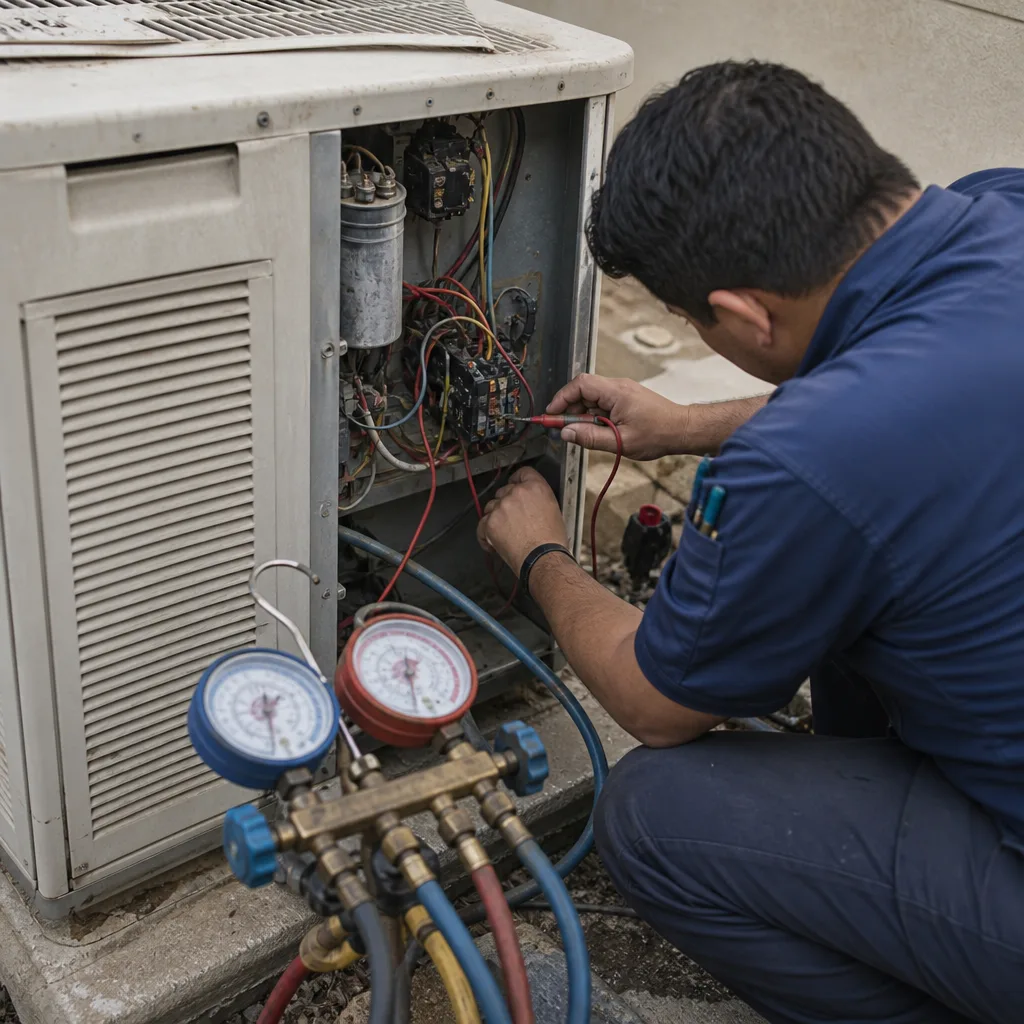 Before
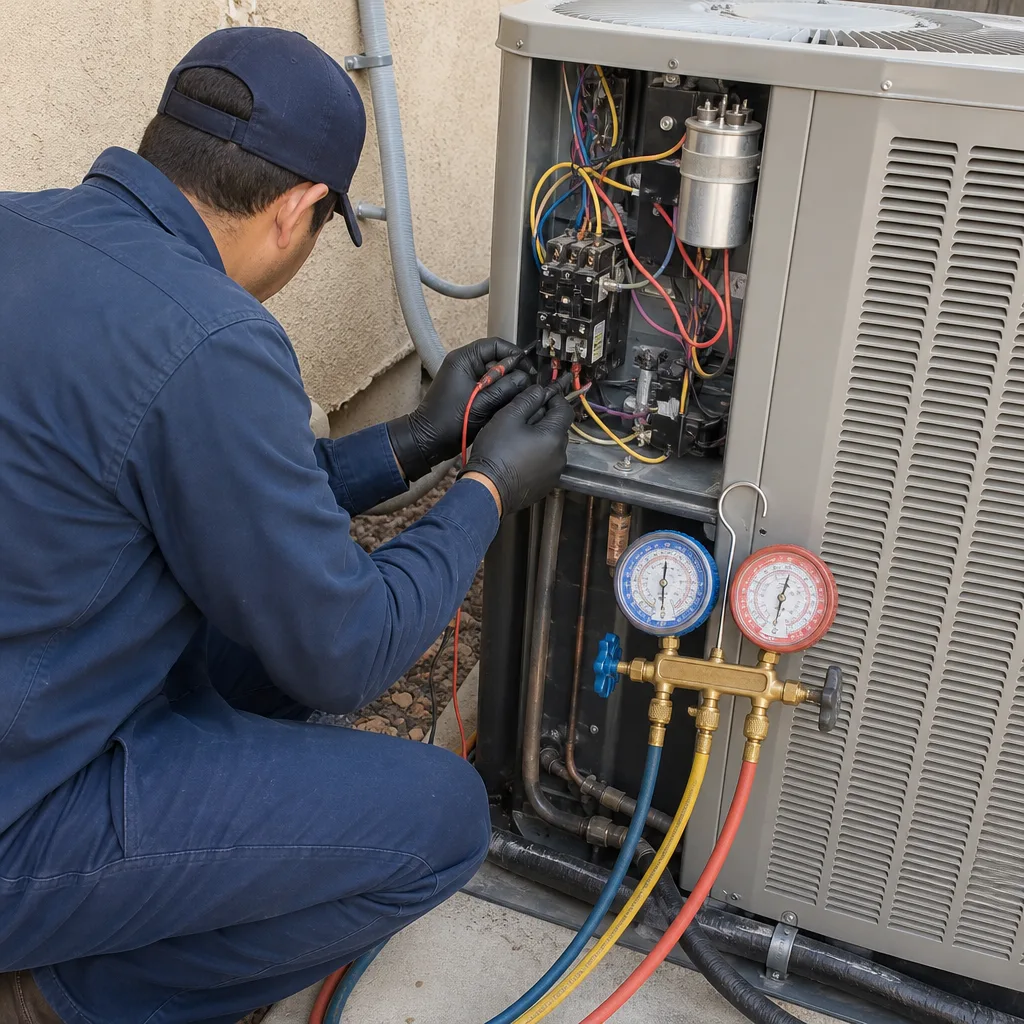 After
After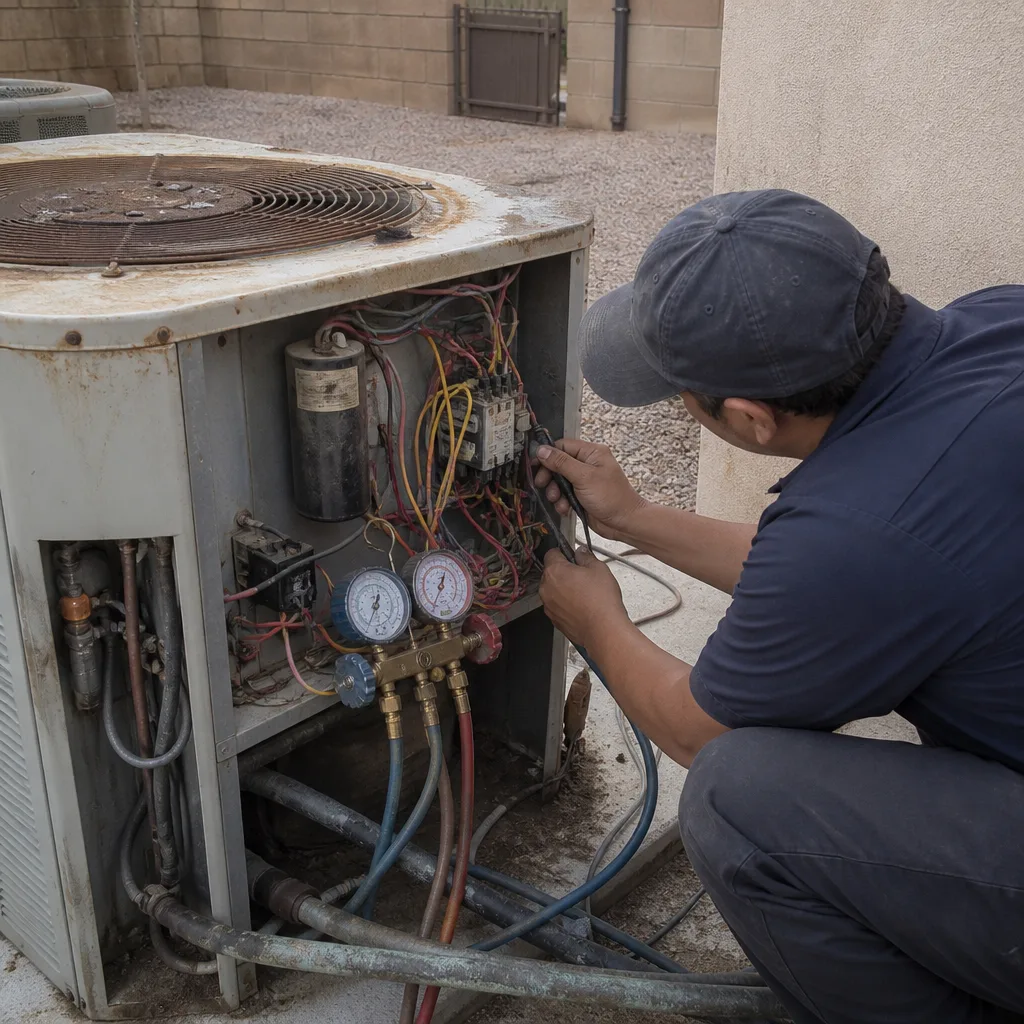 Before
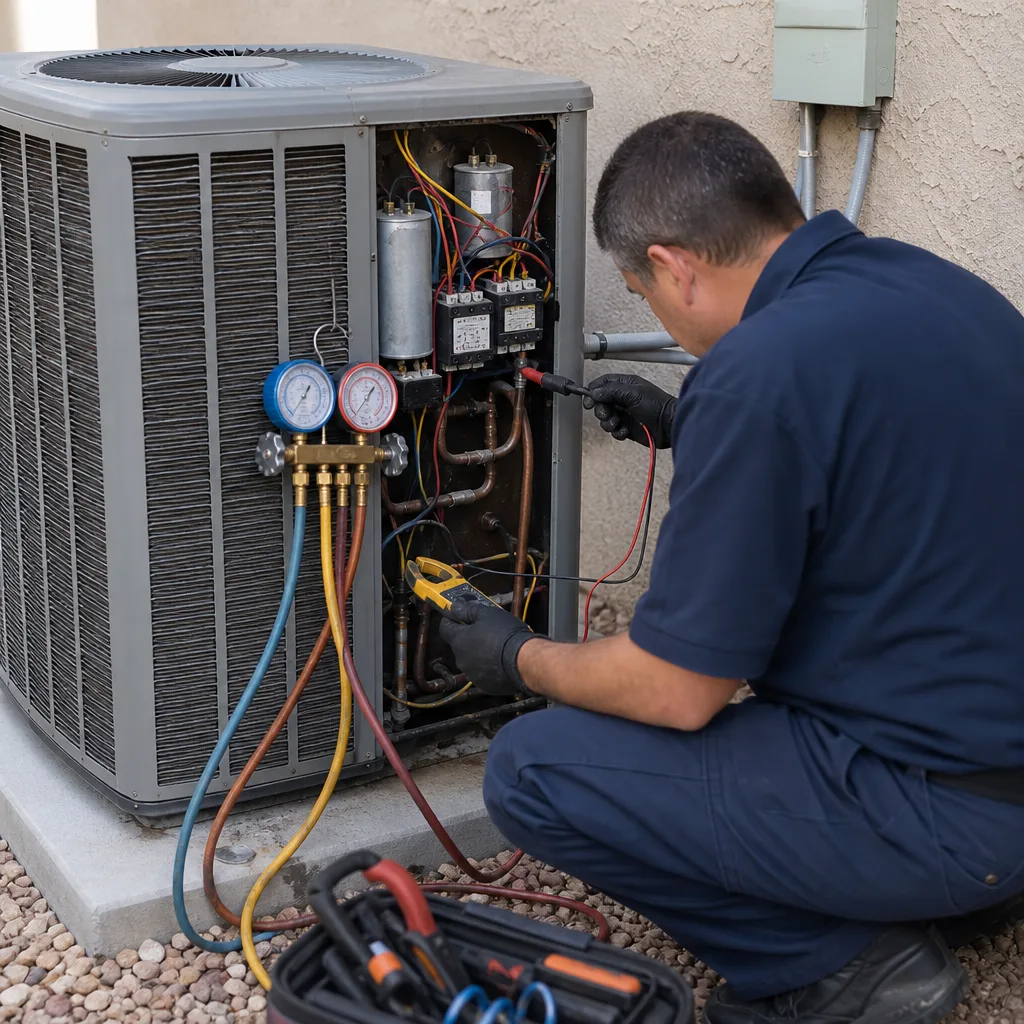 After
After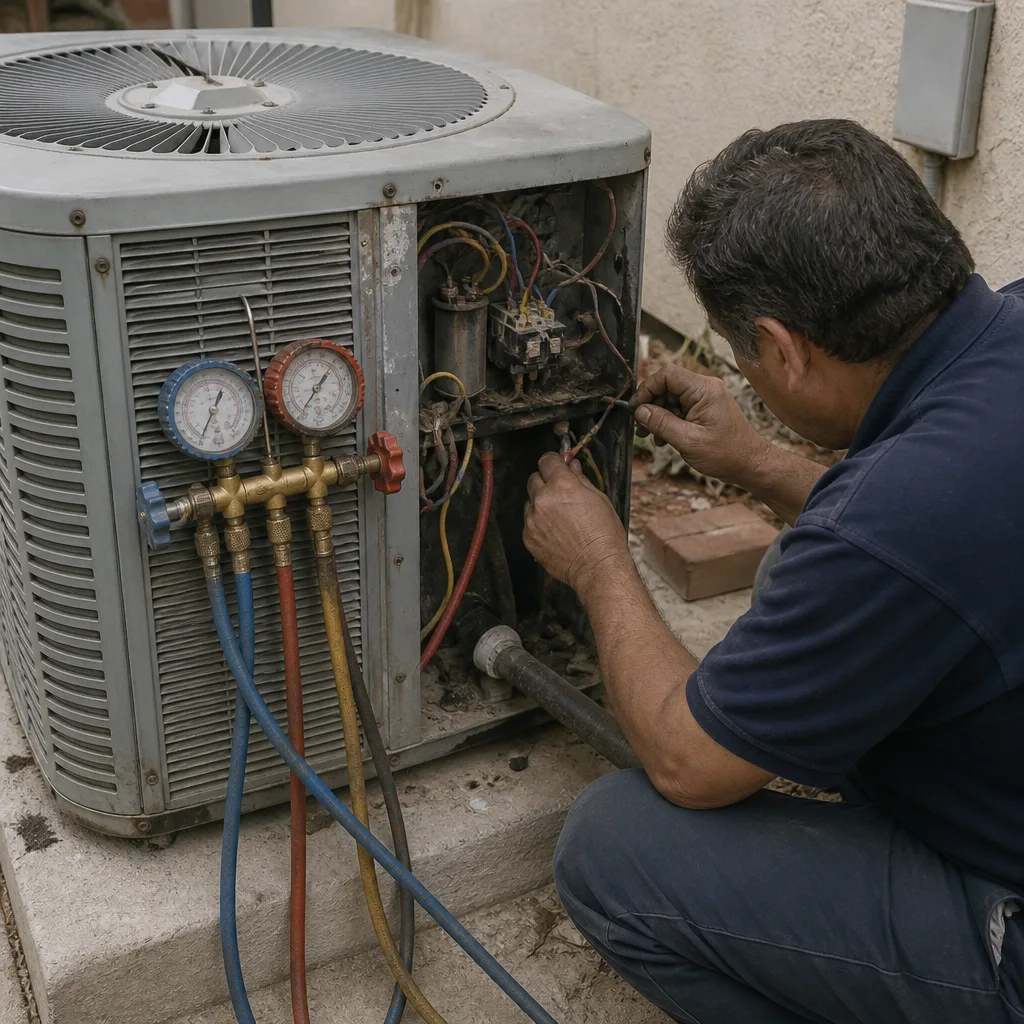 Before
 After
After