
Last updated October 16, 2026
 AC repair
 Furnace & heating
 Heat pumps
 Ductless mini splits
 Carrier
 Trane
Trane Goodman
Seasonal tune-up and full diagnostic on your Carrier, Trane, or Goodman system - readings shown to you before any repair is proposed
Diagnosis first, numbers second - you approve the repair price before a single part goes in.
Get your free estimateAC Repair Maintenance Checklist for Las Vegas Homeowners
Your AC filter can clog to airflow-restricting levels in 21 days during a Las Vegas July. Read that again. The 90-day replacement window printed on most filter packaging was written for homes in Sacramento or San Diego, not the Mojave. Our serviced systems in Summerlin, Henderson, and Centennial Hills tell the same story every year: the desert accelerates wear on every component, and a maintenance schedule built for a generic climate will not protect a Las Vegas system. This guide is organized around our actual cooling calendar, with the sequence and timing of checks matched to what your unit experiences month by month. For a deeper dive, see The Complete Guide to HVAC in Las Vegas. You’ll learn which five parts fail most often in the desert, what specific pressures your system should show at 110°F, and what to do before and after monsoon season hits.
Styles & brands we work with
Quick Answer
An AC maintenance checklist for Las Vegas homeowners should be organized around the desert cooling calendar, not the four seasons. In this climate, you should check or replace your air filter every 30 days during peak cooling, schedule a professional coil cleaning and pressure check in April before the first triple-digit day, and do a post-monsoon inspection in August or September. A desert AC typically needs two professional inspections per year, not one, and the five components that deserve your closest attention are capacitors, contactors, TXV valves, secondary drain pans, and condenser fan motors.
Table of Contents
- The Las Vegas Cooling Calendar: A Month-by-Month Task Map
- The Five Components That Fail Most in Las Vegas
- Refrigerant Pressures at 110°F: What Your System Should Show
- Coil Cleaning in a Dust Environment: Why Twice a Year Is the Minimum
- The Post-Monsoon Inspection: What August Does to Your AC
- The 30-Day Filter Rule: A Las Vegas-Specific Schedule
- What a Homeowner Can Do vs. What a Pro Should Handle
- Common Mistakes to Avoid
- When to Call a Professional
- Frequently Asked Questions
- The Bottom Line
The Las Vegas Cooling Calendar: A Month-by-Month Task Map
We’ve worked on HVAC systems in Las Vegas since 2004, and the single most useful thing we tell homeowners is this: stop thinking about AC maintenance as a spring and fall ritual. The Mojave does not have a mild shoulder season where your system rests. Your AC can cycle on in February and run until late October. That stretch, from the first warm day to the last, is effectively one continuous stress test. A calendar built around temperature thresholds, not calendar months, will serve you far better. Here is the schedule we recommend to customers across Las Vegas, from Aliante to Silverado Ranch.
January and February: Light Duty, But Not Zero Duty
Daytime highs sit in the 50s and 60s, and your AC may not run for weeks. This is the window for the least urgent but most valuable work. Check your filter before you forget about it entirely. Inspect the area around your outdoor condenser unit. Winter winds push tumbleweeds, plastic bags, and construction debris against the coil, and the unit will sit there half-blocked until the first hot day catches you off guard. If you have a smart thermostat, pull its runtime history for the previous summer. Unusually long runtimes at moderate temperatures often point to a developing airflow problem that will get worse.
March: The Pre-Hot-Season Visual Sweep
By mid-March, Las Vegas sees its first 80-degree days. Your system transitions from dormant to active. Run the AC for 30 minutes and stand at each supply register in the house. Feel the air temperature. If one room is noticeably warmer than another while the system runs, note it now. Damper positions, duct leaks, and low refrigerant all show up as uneven cooling, and catching the problem in March gives you weeks to schedule a repair before demand spikes. Check your thermostat batteries if your unit uses them. A dead battery in July means a system that will not turn on during a heat wave.
April: Schedule the Pre-Season Pressure and Coil Check
This is the most important month on the calendar. By April, daytime highs in Las Vegas regularly break 85°F, and your system starts working daily. We recommend a professional inspection that includes a refrigerant pressure check, a coil cleaning, and an electrical connection inspection. Why April specifically? Because May brings the first 100-degree days, and every HVAC company in the valley gets booked solid. If you schedule in April, you can choose your appointment time. If you wait until the first triple-digit afternoon, you are calling alongside every other homeowner in Las Vegas. This is also the month to verify your condensate drain line is clear. A clogged drain in April is a minor annoyance. A clogged drain in July can overflow and damage the secondary drain pan or, worse, the ceiling below an attic unit.
May: The Pre-Memorial Day Pressure Check Window
Here is a Las Vegas-specific fact that most checklists miss: HVAC demand pricing shifts around Memorial Day. The first sustained heat wave of the year typically arrives in the second half of May, and that is when repair requests spike across the valley. If your April inspection found marginal refrigerant levels or a weakening capacitor, schedule the repair before Memorial Day weekend. The part costs the same, but the availability and appointment flexibility are far better. We track this every year at Halden Heating and Air Las Vegas home service area, and the pattern holds: call volume doubles the week after the first 100-degree Saturday.
June and July: Continuous Monitoring
This is when your AC runs near-constantly. Highs sit between 105°F and 115°F, and your system cycles more in one week than it did in all of March. Check the filter every 30 days without exception. If you have pets or live near any of the ongoing construction in neighborhoods across Las Vegas, check it every two weeks. Listen for changes. A system that hisses, rattles, or hums differently than it did a month ago is telling you something. Do not wait for a full failure. Isolate the sound: indoor unit or outdoor unit? When does it happen: at startup, shutdown, or continuously? That information helps a technician diagnose the problem over the phone, often before they arrive.
August: Post-Monsoon Inspection
Monsoon season in Las Vegas runs from mid-June through September, but August is traditionally the most active month for storms. After any significant storm with wind or blowing dust, walk out to your condenser unit. Look for debris wedged against the coil fins. Check for standing water around the pad. If your power flickered during the storm, note it. Voltage spikes and brief outages stress capacitors and contactors, and the damage does not always show up immediately. We see a measurable increase in capacitor failures in the two weeks following major storm activity. This is the month to schedule a post-monsoon inspection if your system is older than ten years or if you lost power during a storm.
September and October: The Cooling-Down Check
Daytime highs fall back into the 80s and 90s, and your system gradually runs less. This is the second-best window for professional maintenance. The summer has deposited a full season of dust, pollen, and debris on your coil. A second cleaning in September or October clears that buildup before it sits on the coil all winter and bakes into a hardened layer. It is also the right time to ask your technician for a read on how the system performed: refrigerant pressures, amp draws, and temperature splits reveal problems that wait silently through the winter and return in April.
November and December: Rest and Planning
Your AC rests, but your planning should not. If your system is over twelve years old or required multiple repairs during the summer, this is the time to start researching a replacement. AC Installation in Las Vegas pricing and availability are both better in the winter months. You have months to compare options instead of making a decision during a July emergency when your house is 90 degrees inside.
The Five Components That Fail Most in Las Vegas
Every climate has its own failure profile. A Cleveland HVAC company sees rusted heat exchangers and frozen coils. In Las Vegas, our repair calls cluster around five specific parts. Knowing what they are, and why the desert kills them, helps you ask the right questions when a technician gives you a diagnosis.
1. Capacitors
The capacitor is the electrical component that gives your compressor and fan motor the jolt they need to start. Think of it like a starter battery. Las Vegas heat is brutal on capacitors because high ambient temperatures break down the dielectric material inside the part faster than anything else. A capacitor that would last eight years in Portland may fail after four summers in Las Vegas. When it fails, the classic symptom is a condenser unit that hums but does not spin. The fan motor tries to start, cannot, and the hum is the sound of it struggling. This is the single most common AC repair we perform in Las Vegas.
2. Contactors
A contactor is an electrical switch that turns your outdoor unit on and off in response to the thermostat. Inside the contactor are contact points, and every time the switch closes, a small electrical arc crosses those points. Over tens of thousands of cycles in a long Las Vegas summer, the points burn and pit. Eventually the contactor sticks closed or fails to close. A stuck contactor means the condenser runs even when the thermostat is off. A failed contactor means nothing happens when the thermostat calls for cooling. Arcing and pitting happen everywhere, but Las Vegas systems cycle far more frequently than systems in moderate climates, so the part wears faster.
3. TXV Valves
The TXV, or thermostatic expansion valve, is the metering device that controls how much refrigerant enters the evaporator coil. It is a precision component, and it is sensitive to contamination and heat stress. In Las Vegas, two things shorten TXV life. First, the system runs at higher pressures because of high outdoor temperatures, which puts more load on the valve. Second, dust intrusion. If the system ever runs with a slightly low charge or a partially clogged filter, the TXV works harder to compensate, and that extra work accumulates. A failing TXV shows up as poor cooling on hot days, freezing at the indoor coil, or a system that cools but cannot reach the thermostat set point by more than a few degrees.
4. Secondary Drain Pans
Every indoor AC coil produces condensation. In Las Vegas, the air is dry most of the year, so condensation volumes are lower than in humid climates, but the water that does form sits in the drain pan and evaporates slowly. That slow evaporation leaves mineral deposits behind. Over several years, those deposits build up and clog the primary drain line, pushing water into the secondary drain pan. The secondary pan is a safety device, not a permanent drainage path. If it fills, it can overflow, and if your unit sits in an attic or above a finished ceiling, that overflow damages drywall, insulation, and electrical connections. We have seen secondary pan failures in Las Vegas attics cause thousands of dollars in damage because a homeowner never knew the primary line was clogged.
5. Condenser Fan Motors
Your outdoor condenser unit houses a fan that pulls air through the coil. In Las Vegas, that fan runs against 110-degree ambient air for thousands of hours each summer. The motor’s bearings wear from heat and the motor itself runs hotter than it was designed to. When a condenser fan motor fails, the outdoor unit cannot reject heat, pressures climb rapidly, and the system shuts down on a high-pressure safety switch. A failed condenser fan motor is a common mid-July emergency call, because the system works fine until the motor seizes and everything stops at once.
Refrigerant Pressures at 110°F: What Your System Should Show
Most AC maintenance checklists tell you to check refrigerant pressures. Almost none of them tell you what the numbers should be on a 110-degree Las Vegas afternoon. Here is the direct answer, because a homeowner who knows the target ranges cannot be talked past.
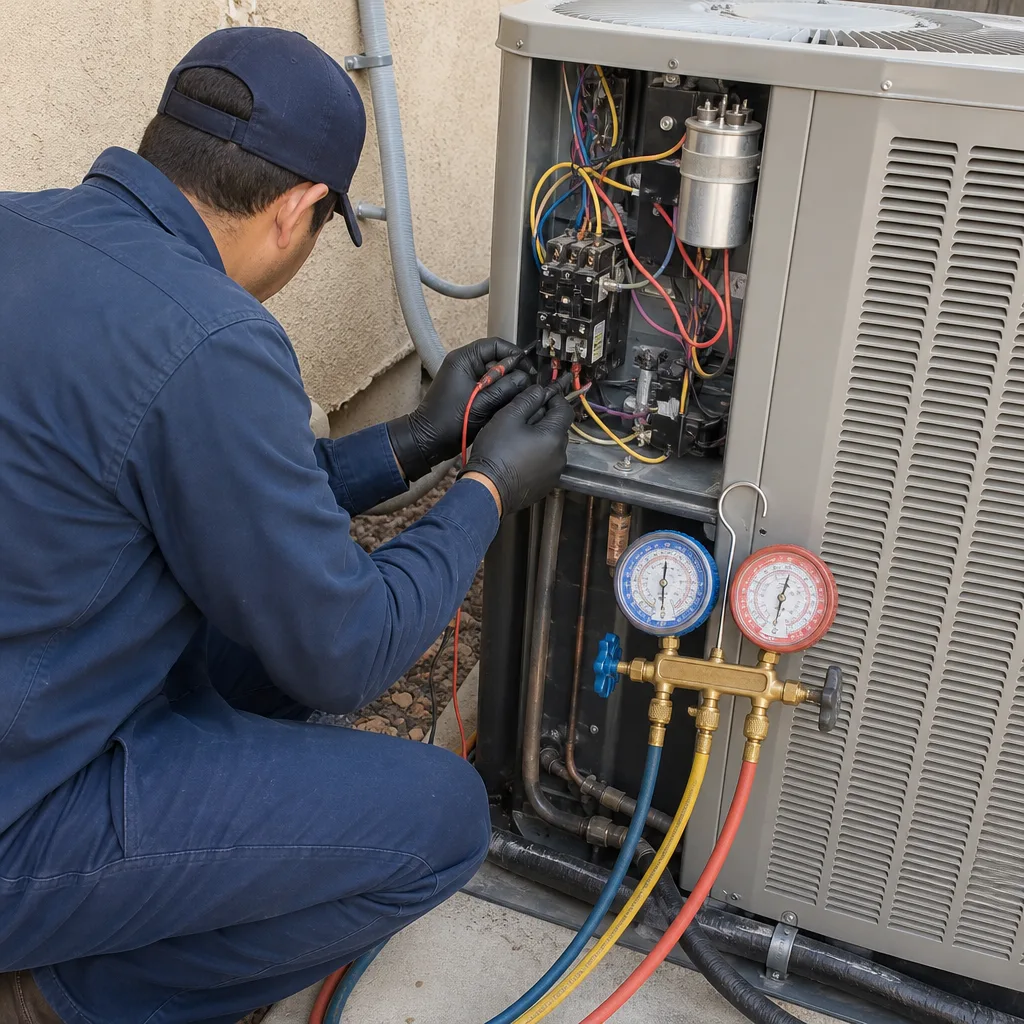
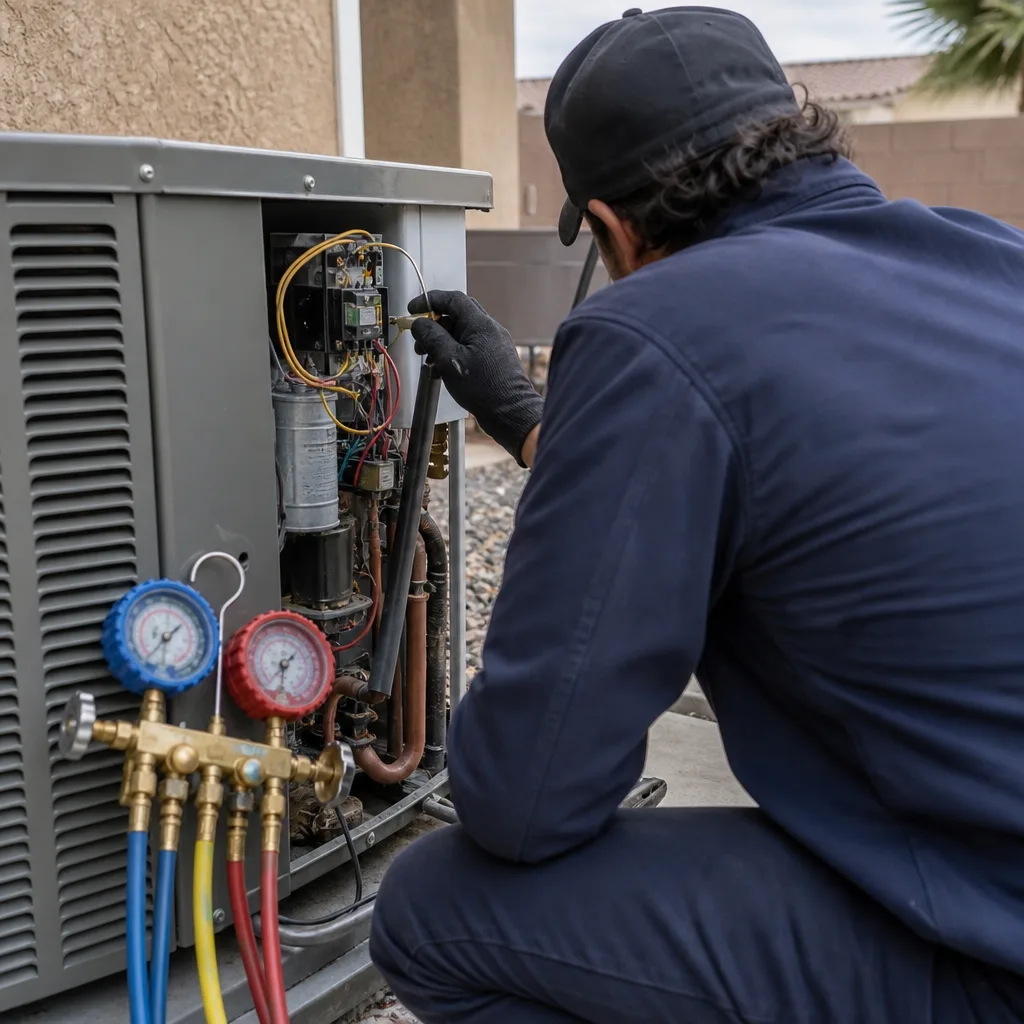
For an R-410A system running on a 110°F day, the suction side, measured at the larger line entering the outdoor unit at the service valve, should typically fall between 120 and 150 PSI. The liquid side, measured at the smaller line, should fall between 400 and 480 PSI, depending on the exact equipment and a handful of variables.
For an R-32 system, which is the newer refrigerant appearing in more equipment from manufacturers like Trane, Lennox, Goodman, and Rheem, the numbers are different. On a 110°F day, suction should read between 125 and 155 PSI, and liquid pressure should sit between 420 and 510 PSI. These are not universal constants. Equipment type, coil condition, and indoor load all move the numbers. But if a technician quotes you a suction pressure of 90 PSI on an R-410A system during a July heat wave and says everything is fine, that number is too low, and you should ask for an explanation.
Here is what the numbers tell you. Low suction pressure on a hot day can mean undercharge, a restricted metering device, low airflow across the indoor coil, or a dirty evaporator. High liquid pressure can mean a dirty outdoor coil, a failing condenser fan motor, or overcharge. The two readings together form a diagnostic picture. A technician who measures only one side is seeing half the story. We check both on every AC Repair in Las Vegas call, and we write the numbers down, because a pressure that is drifting downward from one visit to the next indicates a slow leak long before the system stops cooling.
One more Las Vegas-specific note: if your technician says the pressures are “a little low” and recommends a refrigerant recharge, which means topping off the coolant your system needs to produce cold air, ask where the refrigerant went. Refrigerant does not burn off or get used up. It circulates in a closed loop. A low charge means a leak, and topping off without finding the leak is a temporary patch. A reputable technician will locate and repair the leak before recharging.
Coil Cleaning in a Dust Environment: Why Twice a Year Is the Minimum
Your outdoor condenser coil is a wall of metal fins designed to transfer heat from the refrigerant to the outside air. Every cubic foot of air that passes through the coil carries dust, pollen, construction silt, and whatever the Las Vegas wind picks up. Over a summer, that material coats the fins and forms an insulating layer. When the coil is dirty, the system cannot reject heat efficiently, so the compressor runs hotter and longer. We see confirmed cases in Las Vegas where a heavily fouled coil raises energy consumption by 15 to 20 percent and cuts cooling capacity enough to make a 78-degree set point unreachable on the hottest afternoons.
A homeowner’s hose rinse helps between professional cleanings, but it is not the same thing. Here is what professional coil cleaning actually involves. First, the technician removes the condenser lid and fan assembly to access the coil from the top and from the inside. Second, they apply a dedicated coil cleaning solution that breaks down the baked-on layer of silt and pollen. Third, they rinse from the inside out, not the outside in, because rinsing from the outside pushes debris deeper into the fins. Fourth, they inspect the fins for damage and straighten bent sections with a fin comb. Finally, they check the coil for signs of leaks, which show up as oily spots where refrigerant escaped and carried compressor oil with it.
In Las Vegas, we recommend professional coil cleaning twice per year: once in April before the summer load begins, and once in September or October after the monsoon and peak dust season have passed. Homes near active construction, which is a permanent condition in much of the Las Vegas valley, often need it more often. If you live within half a mile of grading or framing work in neighborhoods like Summerlin’s western edge or the new developments south of Henderson, check your coil every 60 days during construction season and schedule cleanings as needed.
The Post-Monsoon Inspection: What August Does to Your AC
Monsoon season in Las Vegas is not a gentle rain. It arrives as sudden microbursts, blowing dust, and lightning that knocks out power across the valley. Your AC suffers specific damage during these storms, and it is damage that does not always show up the same day. A post-monsoon inspection catches it before a minor problem becomes a dead system on the next 110-degree afternoon.
Start with a visual walkaround of your outdoor condenser unit. Look for debris wedged between the coil and the louvered housing. Palm fronds, tumbleweed pieces, and plastic bags are the most common intruders in Las Vegas. Check the pad for standing water. A condenser pad that has shifted from storm runoff can tilt the unit and starve the compressor of oil. Look at the electrical disconnect box near the unit. If it is scorched or the breaker tripped during the storm, that is a sign the system took a voltage spike.
Then run the system and listen. A capacitor or contactor damaged by a power surge often fails days or weeks after the storm. The first symptoms are a hard-starting compressor, a click instead of a hum, or intermittent operation. If the system starts and runs but cools poorly, the storm may have clogged the coil with a layer of mud and dust. A thick coating of fine silt after a dusty outflow wind can reduce airflow through the coil enough to affect cooling within 24 hours.
Here is a post-monsoon checklist we use on our own calls in Las Vegas:
- Inspect the condenser coil for debris and mud coating.
- Check the disconnect box and breaker for scorch marks or tripped breakers.
- Listen for hard starts, clicking, or humming from the outdoor unit.
- Test the system under load for 20 minutes and verify the temperature split between supply and return air.
- Check the drain line and pan for silt that washed in with storm runoff.
- If power flickered multiple times during the storm, a capacitor test takes five minutes and prevents a future failure.
If your system is more than ten years old or you lost power during a storm, schedule a post-monsoon inspection even if everything seems fine. The damage is not always visible, and a capacitor that survived one surge may not survive the next.
The 30-Day Filter Rule: A Las Vegas-Specific Schedule
The most common piece of advice in any AC maintenance guide is “change your filter regularly.” What almost no guide tells you is that “regularly” means something different in Las Vegas than it does anywhere else. Here is the rule we give every customer: during cooling season, which is May through October in Las Vegas, check your filter every 30 days and replace it if it is visibly dirty. That is twice as often as the packaging likely recommends.
Why does the desert accelerate filter loading? Our air carries fine particulate matter: silty dust from the surrounding Mojave, pollen from spring desert blooms, pet dander that circulates constantly in sealed homes, and construction dust from one of the fastest-growing metro areas in the country. A standard one-inch fiberglass or pleated filter doing normal duty in a Las Vegas home can reach airflow-restricting levels in three weeks during July. We have measured pressure drops across filters in Las Vegas homes that were triple the manufacturer’s rated clean-filter number after just one month of peak-season use.
Here is a practical schedule:
- Homes with no pets, no construction nearby, and a 1-inch filter: Replace every 30 days during cooling season, every 60 days in winter.
- Homes with one or more pets: Replace every 21 to 30 days during cooling season.
- Homes within half a mile of active construction: Check every 14 days, replace when dirty.
- Homes with a 4-inch or 5-inch media filter cabinet: These hold more surface area and can go 90 days in most Las Vegas homes, but check monthly during peak summer anyway.
A clogged filter does more than reduce airflow. It raises the pressure drop across the indoor coil, which drops the coil temperature, which can cause the coil to freeze in exactly the conditions where you need cooling the most. It also makes your blower motor work harder, which shortens its life and uses more electricity. The filter is the cheapest component in the system, and it protects the most expensive ones. In Las Vegas, the dollar you spend on an extra filter every month is the best maintenance investment in the system.
What a Homeowner Can Do vs. What a Pro Should Handle
There is a line between homeowner maintenance and professional service, and it is worth drawing clearly. Some tasks are safe and simple for a homeowner to perform. Others involve high voltage, pressurized refrigerant, or components where a mistake makes the problem worse.
Homeowner-level tasks:
- Replace the air filter on schedule.
- Keep the area around the outdoor condenser unit clear of debris, plants, and stored items.
- Visually inspect the condenser coil and note if it looks dirty or clogged.
- Pour a cup of distilled white vinegar down the condensate drain line monthly as a preventive measure against clogs. Do this gently and stop if the line backs up.
- Listen for unusual sounds and note when they occur.
- Check thermostat settings and replace batteries.
- Walk the house during a cooling cycle and note which rooms are warm.
Professional-only tasks:
- Measuring refrigerant pressures and recharging refrigerant.
- Replacing capacitors, contactors, or any electrical component.
- Diagnosing or repairing a TXV valve.
- Cleaning the condenser coil with the top and fan assembly removed.
- Any work involving the compressor.
- Electrical troubleshooting inside the air handler or furnace cabinet.
The line is not arbitrary. Your outdoor condenser unit contains 240-volt electrical connections and a capacitor that can hold a charge even after the power is off. Capacitors discharge through contact, and that discharge can cause serious injury. Refrigerant is a pressurized chemical that requires EPA certification to handle legally. We say this plainly because homeowners in Las Vegas sometimes attempt capacitor swaps or DIY recharges after watching a video, and the risk is real. The same goes for any work on the indoor coil, which sits above a gas furnace in many Las Vegas homes. If your Furnace Repair in Las Vegas unit shares a blower with your AC, the safety boundary applies to both systems.
If a repair involves high voltage, pressurized refrigerant lines, or gas connections, call a licensed professional for AC Repair services. The money you save attempting a DIY fix disappears instantly if you get hurt or if the repair fails and damages the system further.
Common Mistakes to Avoid
- Following a generic 90-day filter schedule. A filter that lasts 90 days in a coastal climate can clog in 21 days here. Check monthly during cooling season and replace when dirty.
- Waiting for the first triple-digit day to schedule maintenance. Every HVAC company in Las Vegas gets flooded with calls during the first heat wave. Schedule your April inspection before the rush.
- Ignoring the outside condenser unit. It sits outside in the dust, wind, and sun all year. If you never look at it, the first sign of a problem will be a dead system on a 110-degree day.
- Treating a refrigerant recharge as a repair. Low refrigerant means a leak, and a recharge without a leak repair is money spent on a temporary patch that will fail again.
- Never checking the condensate drain line. In Las Vegas, slow evaporation leaves mineral deposits that clog drain lines over time. A monthly vinegar rinse takes two minutes and prevents ceiling damage from an overflowing pan.
- Skipping the post-monsoon inspection. August storms damage capacitors, contactors, and coils in ways that do not show up until weeks later. A post-storm check catches the damage while it is still cheap to fix.
- Closing supply registers in unused rooms. It seems like a way to save energy, but it raises static pressure inside the duct system, which stresses the blower motor and can cause the indoor coil to freeze. Keep registers open and use a smart thermostat to manage temperatures instead.
When to Call a Professional
Some situations are not maintenance questions. They are repair calls, and the sooner you make the call, the less expensive the fix. Call a professional if your system makes a grinding, screeching, or banging sound. Call if the outdoor unit runs but the air coming from your vents is warm. Call if the system short-cycles, which means it turns on and off every few minutes without completing a full cooling cycle. Call if you see ice forming on the refrigerant lines or the indoor coil. Call if the breaker for the AC trips more than once. And call if your system is over twelve years old and has needed multiple repairs in one season, because at that point you are likely comparing repair costs against the cost of a new system anyway. Halden Heating and Air Las Vegas offers free estimates in Las Vegas, call (725) 220-3488.
Frequently Asked Questions
During cooling season, which runs from May through October in Las Vegas, check your filter every 30 days and replace it whenever it is visibly dirty. Homes with pets or nearby construction should check every 14 to 21 days. The 90-day recommendation on the packaging assumes a much milder climate than the Mojave Desert.
For an R-410A system, suction pressure should typically read between 120 and 150 PSI and liquid pressure between 400 and 480 PSI at 110°F ambient. For an R-32 system, expect suction between 125 and 155 PSI and liquid between 420 and 510 PSI. These ranges vary by equipment, but a reading far outside them signals a problem.
High ambient temperatures break down the dielectric material inside capacitors faster than moderate climates do. A capacitor that lasts eight years in a cooler city may fail after four summers in Las Vegas because the outdoor unit bakes in 110-degree heat while running near-continuously. Power surges during monsoon storms also damage capacitors.
No. Manufacturer guidance from brands like Trane, Lennox, Goodman, and Rheem consistently advises against full covers because they trap moisture and encourage rust and electrical corrosion. A partial wind block that protects the coil from winter debris is fine, but the unit is designed to sit outside year-round.
Yes, especially for systems over ten years old or any system that lost power during a storm. Monsoon storms in Las Vegas cause voltage spikes, debris accumulation, and coil fouling, and the damage often does not surface for days or weeks. A post-storm inspection catches a weakened capacitor or a clogged coil before it becomes a full failure.
You can rinse the outside of the condenser coil with a garden hose while the system is off, and that helps between professional cleanings. But a proper coil cleaning removes the fan assembly, applies a chemical cleaner, and rinses from the inside out. In Las Vegas dust conditions, professional coil cleaning twice per year is the minimum standard. Call (725) 220-3488 to schedule one.
The Bottom Line
Las Vegas AC systems do not follow the rules written for other climates. The desert heat, dust, and monsoon cycles compress a year of wear into a single summer, which means your maintenance schedule has to be built around the cooling calendar, not the four seasons. Check the filter every 30 days during peak cooling. Schedule a professional inspection in April before the first triple-digit day. Watch the five components that fail most often here: capacitors, contactors, TXV valves, secondary drain pans, and condenser fan motors. Know your refrigerant pressure targets so you can ask informed questions. Do a post-monsoon check in August. A homeowner who follows this checklist will catch problems before they become emergencies, and in Las Vegas, an emergency means no AC on a 110-degree day. That is the one scenario this entire guide exists to prevent.
Written by Andre Fuller, Owner at Halden Heating and Air Las Vegas, serving Las Vegas since 2004.
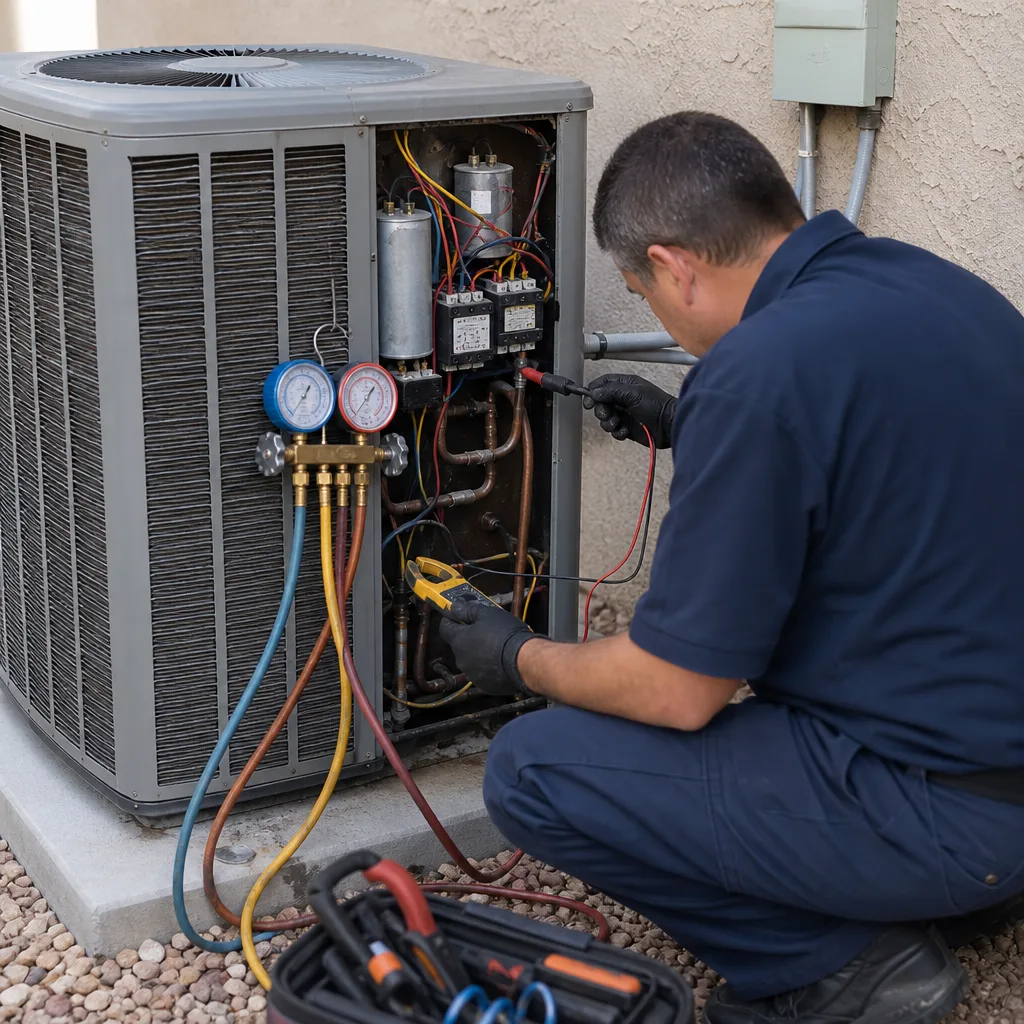
See the difference
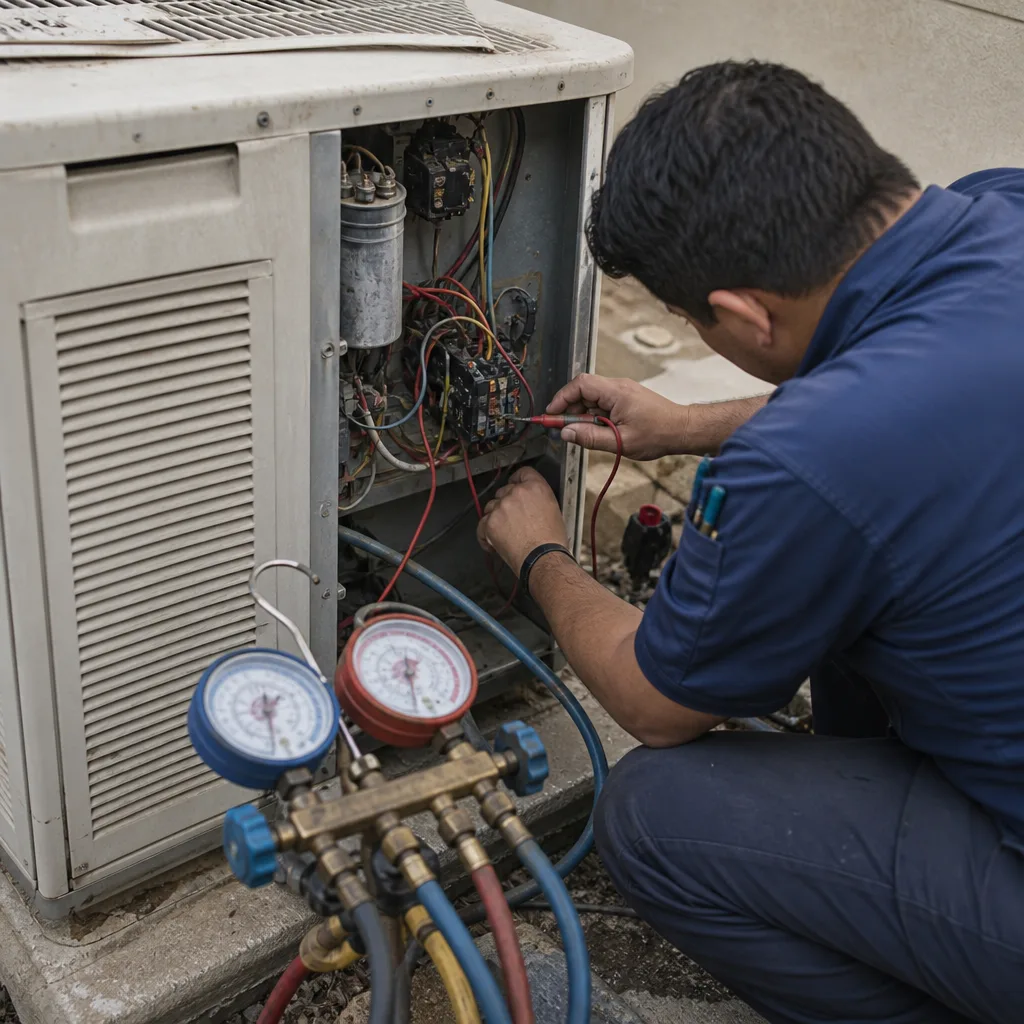 Before
 After
After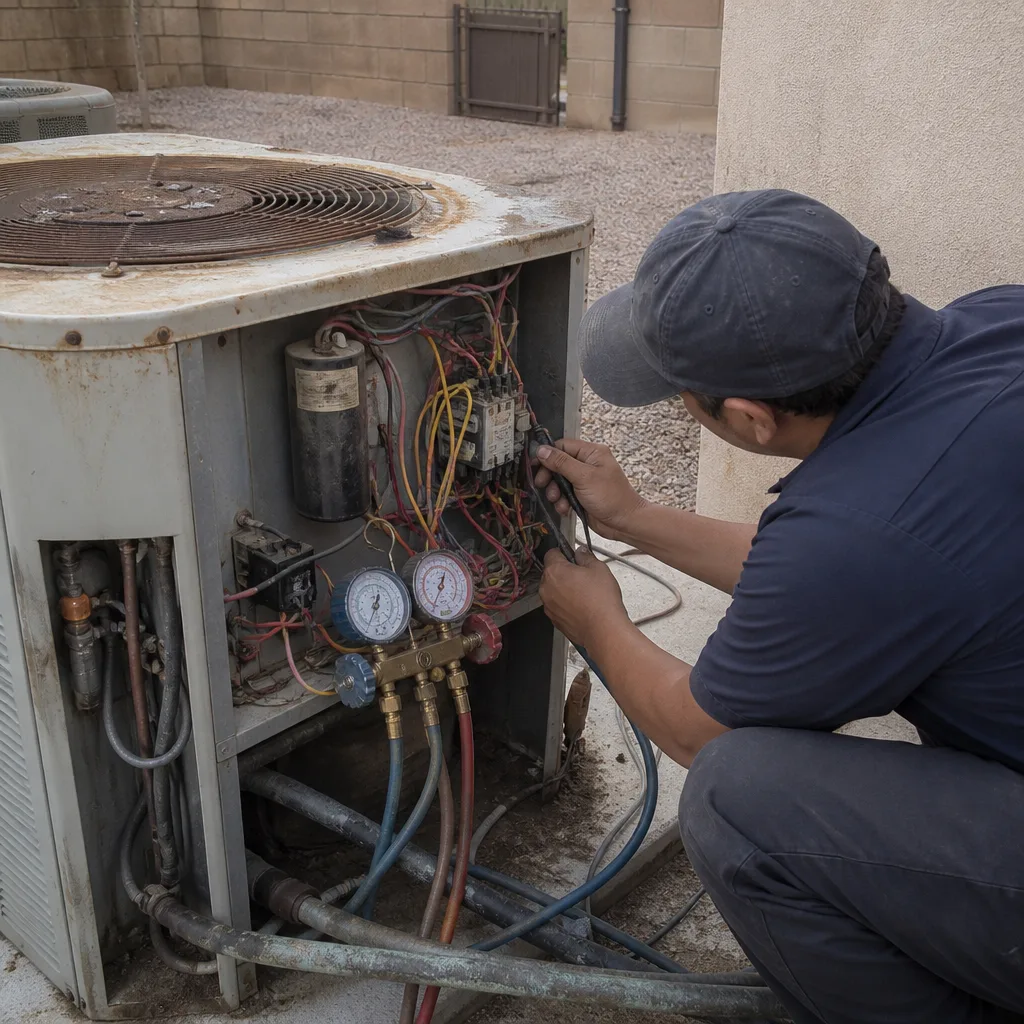 Before
 After
After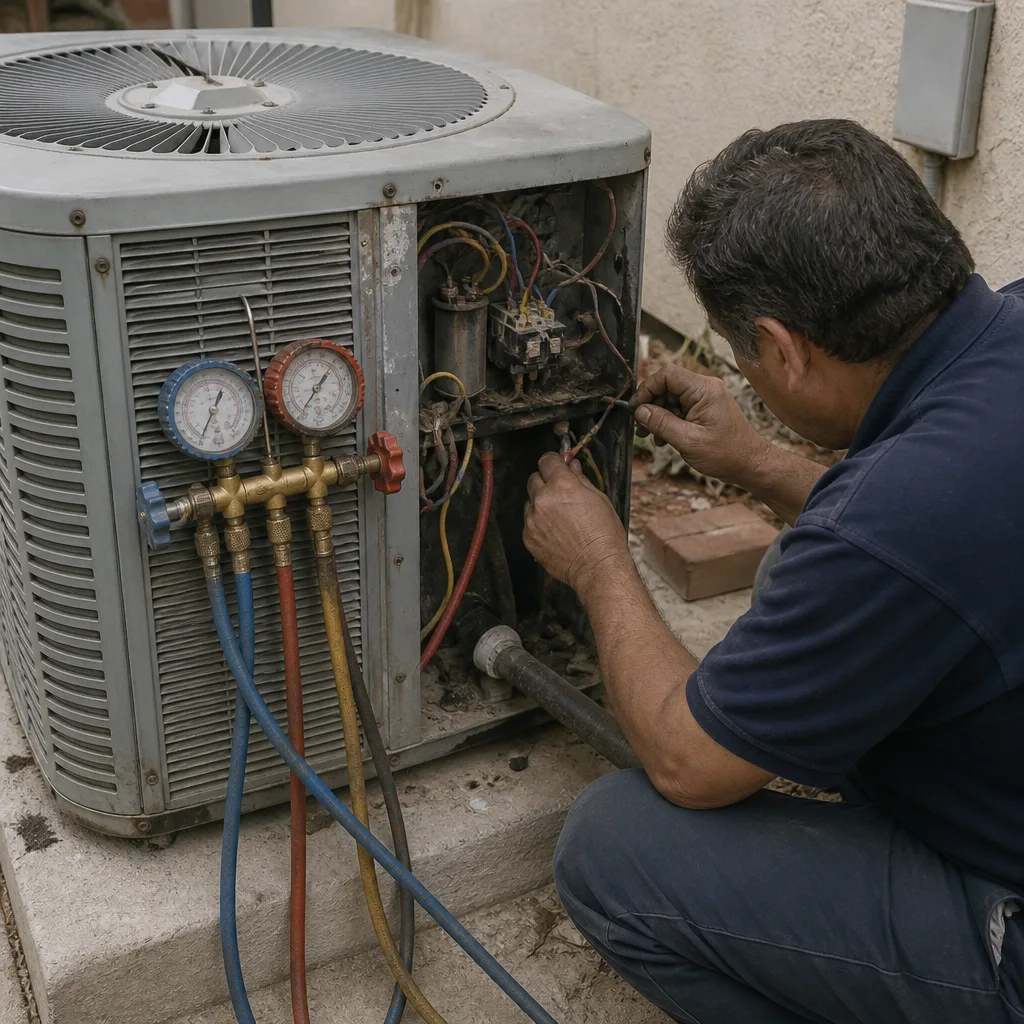 Before
 After
After