
Last updated October 16, 2026
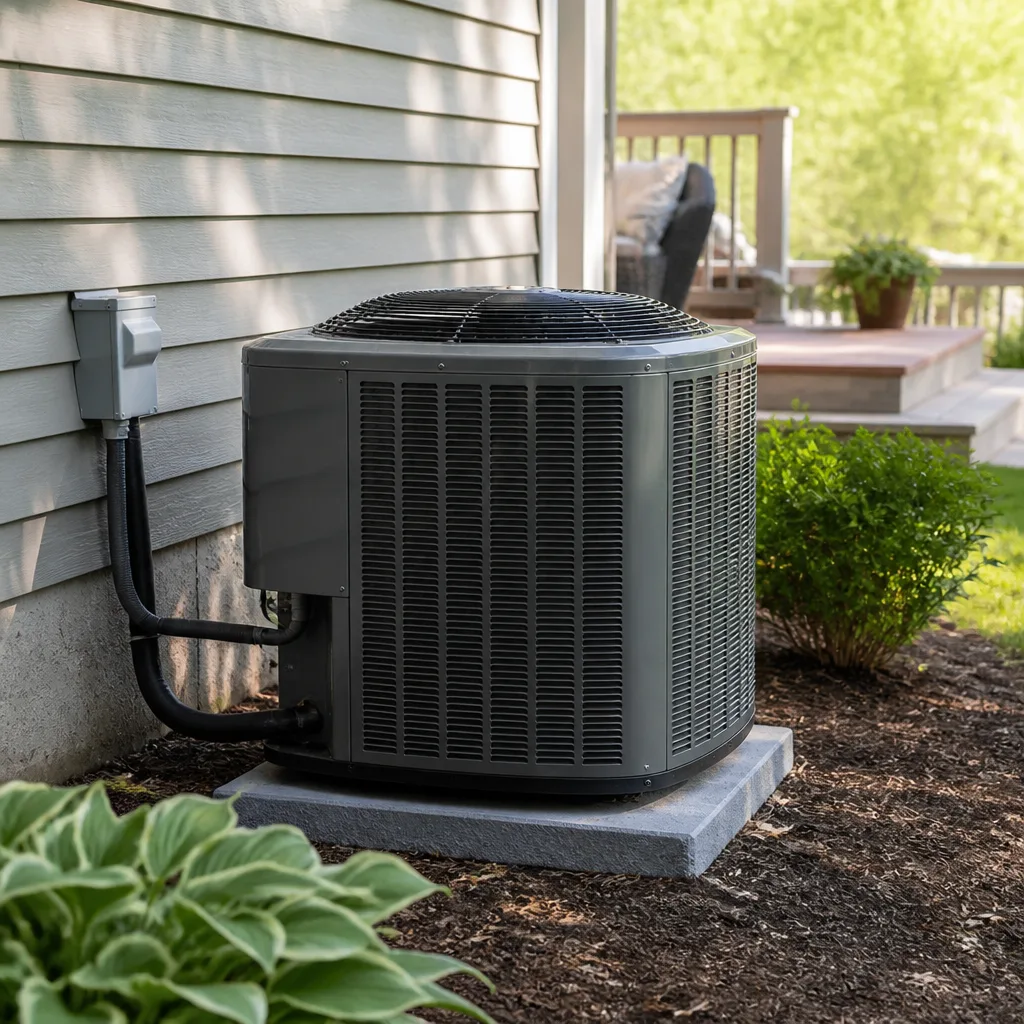 AC repair
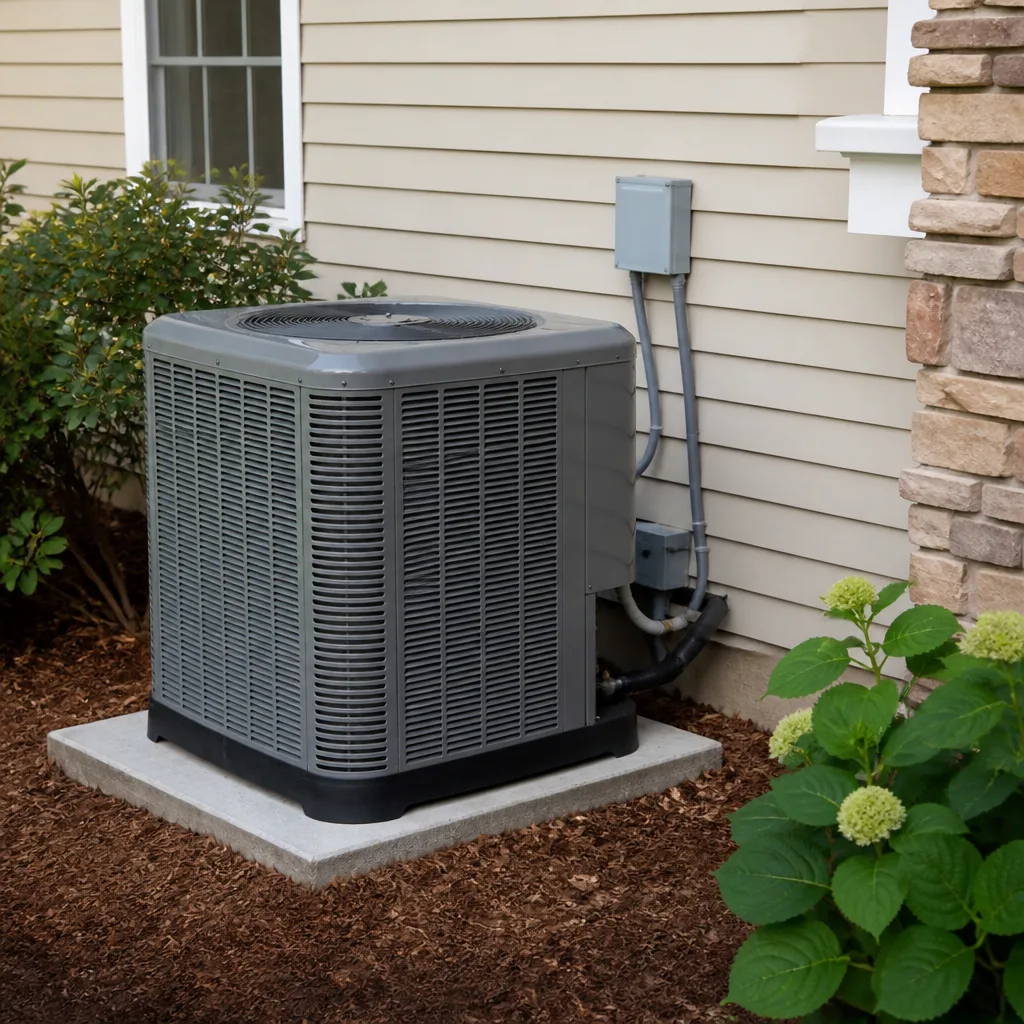 Furnace & heating
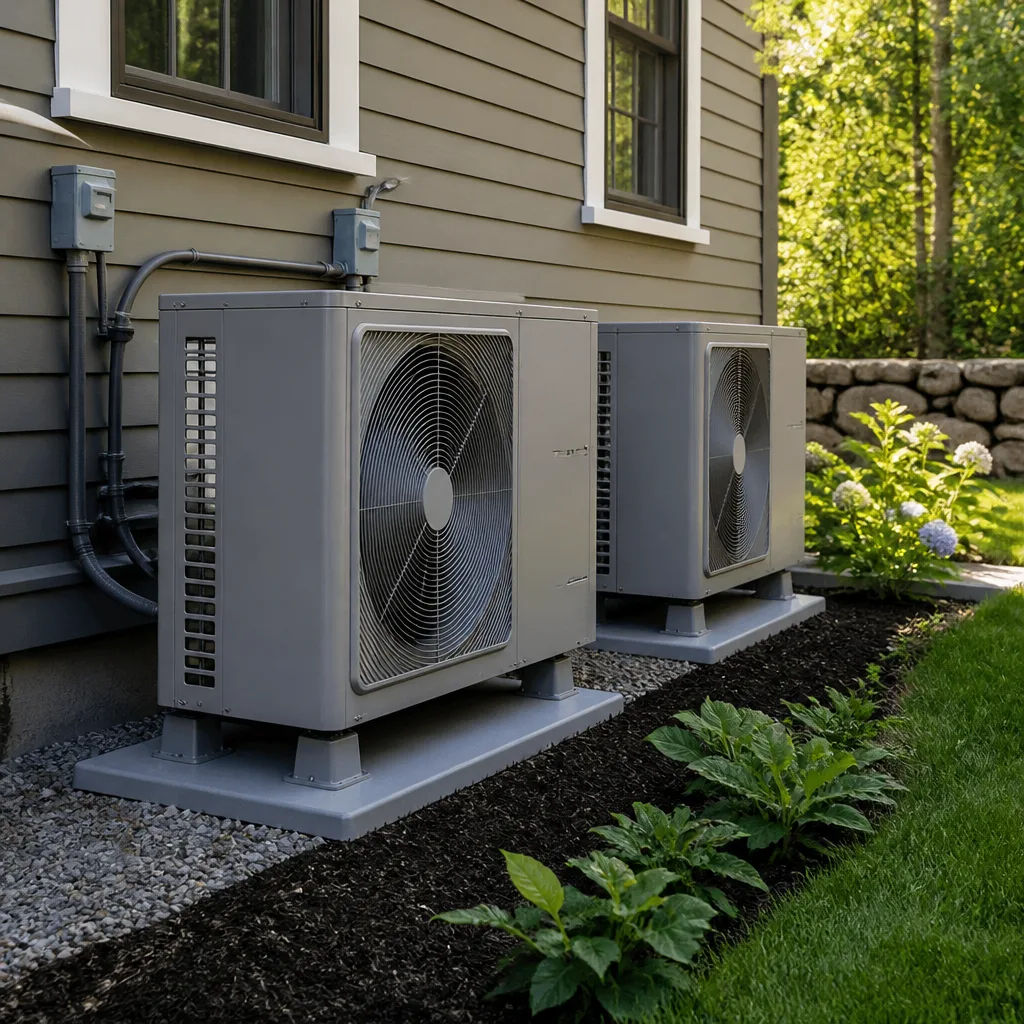 Heat pumps
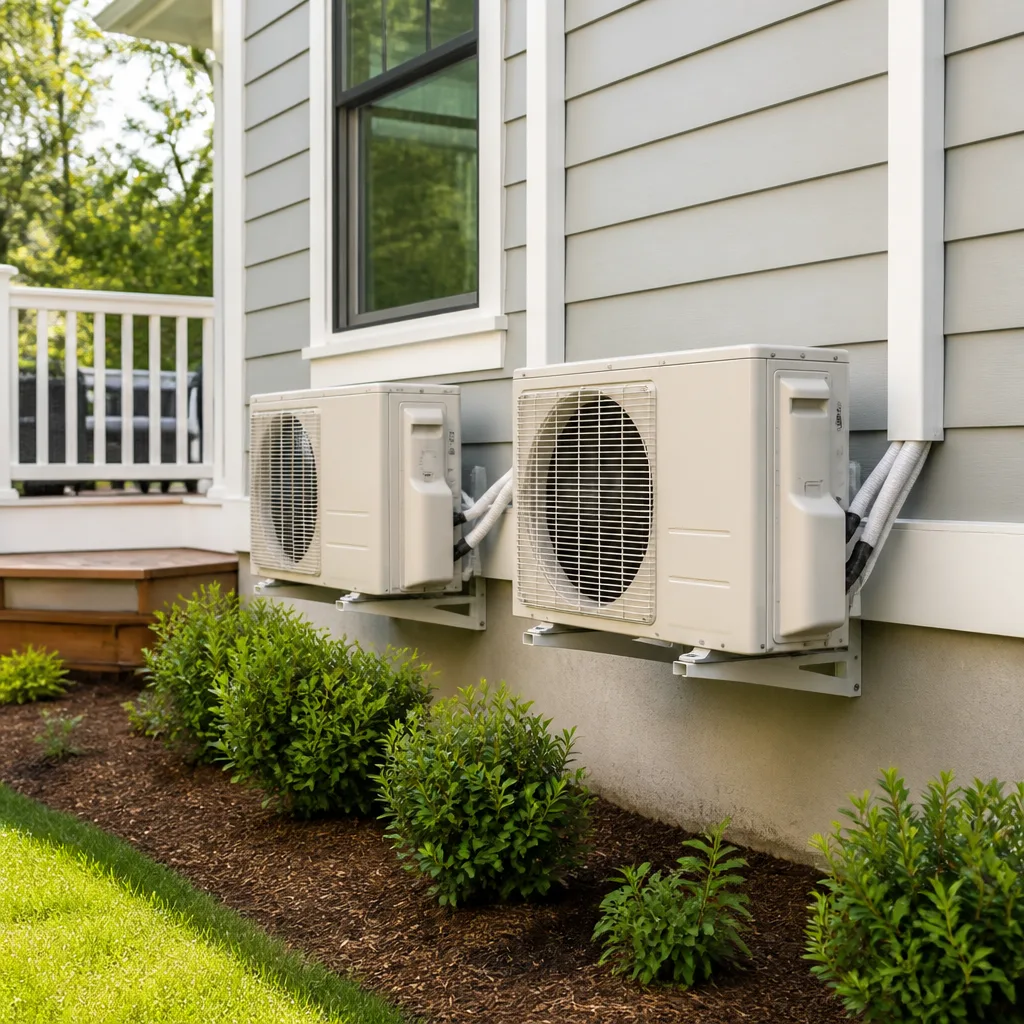 Ductless mini splits
 Carrier
 Trane
Trane Goodman
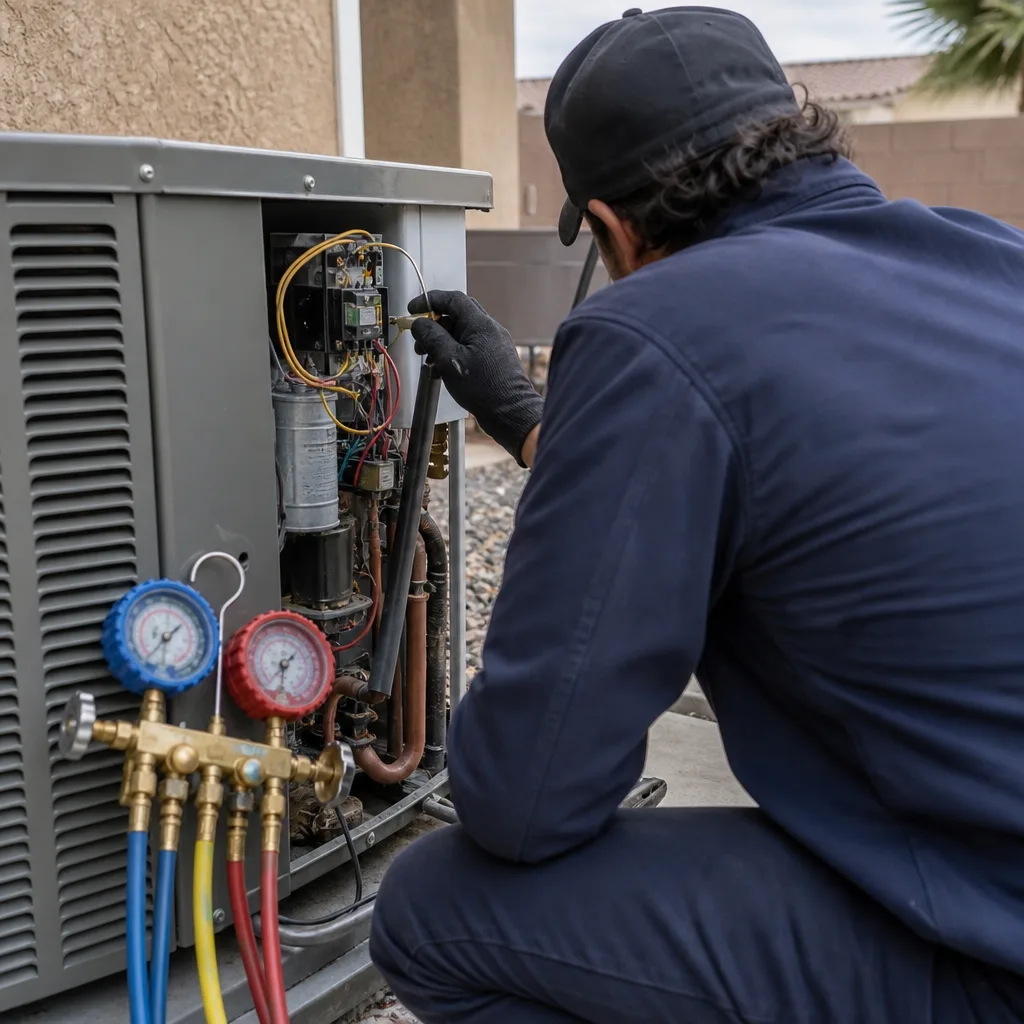
Seasonal tune-up and full diagnostic on your Carrier, Trane, or Goodman system - readings shown to you before any repair is proposed
Diagnosis first, numbers second - you approve the repair price before a single part goes in.
Get your free estimateHow to Hire a HVAC Contractor in Las Vegas: A Step-by-Step Guide
Las Vegas has more than 400 licensed HVAC contractors, and here’s what nobody tells you: the license itself tells you almost nothing about who will actually show up, what they’ll charge, or whether the work will pass inspection. Nevada’s C-21 HVAC license requires passing a trade exam, but it doesn’t require a contractor to carry workers’ comp. That means an uninsured tech injured on your roof can become your legal liability under Nevada homeowner premises law. This guide gives you a repeatable vetting script for hiring an HVAC contractor in Las Vegas, not another generic “get three quotes” checklist, with more guides & resources linked throughout. You’ll learn exactly what to verify, what to ask, and which answers should make you hang up.
Quick Answer
To hire an HVAC contractor in Las Vegas, verify their Nevada State Contractors Board license is active at nscb.nv.gov, confirm they carry workers’ comp and liability insurance in their own name, and require a written estimate that itemizes equipment, labor, permits, and the total price before any work starts. Then ask the 10-question vetting script in this guide and watch for HVAC Warning Signs: A Las Vegas Homeowner’s Reference Guide that signal price-at-the-door upselling. Skip any contractor who won’t put numbers in writing or pulls permits under someone else’s name.
Styles & brands we work with
Table of Contents
- How to Verify a Nevada HVAC License (Without Skipping a Step)
- Workers’ Comp and Liability Insurance: The Coverage Most Homeowners Skip
- What a Written Estimate Must Include in Nevada (And What Contractors Can Leave Vague)
- The 10-Question Phone Script to Vet Any Las Vegas HVAC Contractor
- Permits in Las Vegas: Why Skipping Them Costs More Than the Fee
- What Modern Service Standards Look Like: Live Tracking, Upfront Pricing, Written Guarantees
- Red Flags That Signal a Price-at-the-Door Contractor
- Common Mistakes to Avoid
How to Verify a Nevada HVAC License (Without Skipping a Step)
A C-21 license from the Nevada State Contractors Board is the baseline requirement for any HVAC work in Las Vegas. The number gets printed on trucks, websites, and business cards. What matters is whether that number is active, in good standing, and actually attached to the person showing up at your door. Verifying takes about four minutes, and skipping it is how homeowners end up paying a second contractor to fix the first contractor’s work.
- Go to nscb.nv.gov and click “License Search” in the top navigation. This is the only official database for contractor licenses in Nevada. Third-party directories pull stale data.
- Search by business name or license number. Use the name exactly as it appears on the estimate or vehicle. Many Las Vegas HVAC companies operate under a DBA that differs from their corporate entity, so search both if one comes up empty.
- Confirm the status reads “Active.” A license can be suspended, revoked, expired, or in renewal limbo. “Active” is the only status you accept. If a contractor says the database is behind, that’s not a thing. The Board updates in real time.
- Check the expiration date. Active licenses expire and must be renewed. If the expiration date is within 60 days and they haven’t renewed, treat them as unlicensed until the renewal posts.
- Open the full license record. This is where the gold is. Look for “Workers’ Compensation: Yes” and “Liability Insurance: On File.” A license can be active while both of these are missing, which is exactly the gap this guide exists to close.
- Note the qualifying individual. Nevada licenses are held by a qualifying person, often the owner or a senior license holder. If the name on the record doesn’t match the person who shows up, ask who the qualifier is and whether they’ll be on-site for your job.
In Las Vegas specifically, the volume of work driven by summer AC failures means some companies operate on thin margins with expired insurance. The Nevada State Contractors Board has fined and suspended dozens of local contractors in the last five years for exactly this. In our experience, the homeowners who skip step 5 are the ones who end up calling us after a bad install from an AC installation that never got inspected. Four minutes on the license lookup beats a $4,000 tear-out later.
What the License Number Tells You (And What It Doesn’t)
A C-21 means the qualifying individual passed a trade exam that covers refrigeration, air distribution, and basic electrical. It does not mean the company does quality work, shows up on time, or honors warranties. Las Vegas has licensed contractors who do excellent work, and licensed contractors who have been sued multiple times. The license is the floor, not the ceiling. Use it to eliminate, not to select. The selection part comes from the phone script and written estimate sections below.
Workers’ Comp and Liability Insurance: The Coverage Most Homeowners Skip
Here’s the opening hook made concrete. Nevada law does not require a C-21 contractor to carry workers’ compensation if they have no employees. A solo operator running a one-man HVAC business can hold a perfectly active license with zero workers’ comp coverage. If that solo operator falls off your roof while repairing your condenser, Nevada premises liability law can make you, the homeowner, responsible for their medical bills and lost wages. This is not a hypothetical. It happens in Las Vegas every summer when techs climb onto 140-degree rooftops and press forward through heat exhaustion to finish a job.
- Ask specifically: “Does your company carry workers’ comp, and will you email me a certificate of insurance naming your company as the policyholder?” A certificate of insurance, sometimes called a COI, comes from the insurance carrier, not the contractor. It lists the policyholder, policy number, coverage limits, and effective dates.
- Verify the policyholder name matches the license record. A contractor borrowing another company’s certificate is a real problem. If the COI says “ABC Cooling LLC” but the license you verified says “XYZ Air Inc.,” you’re being shown someone else’s coverage.
- Confirm liability coverage is at least $1 million. General liability protects your home if the contractor damages it. Most reputable Las Vegas HVAC companies carry $1 million to $2 million in general liability. Anything under $500,000 is a yellow flag for a company doing handshake work.
- Check the certificate’s effective dates. Policies lapse. A COI from March that expires in September means nothing in November. Ask for the current certificate and confirm it’s active on the date of your service.
Independent contractors and day laborers pulled from a parking lot are common in the Las Vegas market, especially during the summer rush when established companies are booked out weeks. A contractor who sends an unlicensed, uninsured helper to do a AC repair in Las Vegas is not doing you a favor by fitting you in. They’re transferring risk to your homeowner’s policy. Your insurance agent will confirm this in one sentence if you ask. So ask before the work starts, not after the injury.
What a Written Estimate Must Include in Nevada (And What Contractors Can Leave Vague)
Nevada’s Contractors Board requires that any home improvement contract over $1,000 be in writing. Here’s the loophole: HVAC companies know this, so many keep their initial estimates intentionally under $1,000 for diagnostic work, then hit you with a verbal repair quote that balloons once the unit is opened up. Verbal assurances are not binding. If it’s not on paper, it didn’t happen. That’s the rule you hire by.
A Written Estimate That Protects You Includes:
- The contractor’s full legal name, license number, and physical address. A PO box is a red flag. You want a physical address where you can find them if the furnace repair fails in January.
- An itemized breakdown of equipment costs. This means the condenser unit, evaporator coil, furnace, or heat pump listed by model number and brand, so you can verify prices independently. A contractor who writes “new AC system: $8,500” with no model number is asking you to buy a mystery box.
- Labor charges stated separately from equipment. If the estimate lumps everything into one number, you can’t compare it against other bids. In Las Vegas, labor for a full system replacement typically runs $1,500 to $3,500 depending on scope, while equipment runs $4,000 to $8,000 for mid-range brands like Carrier, Trane, or Goodman.
- Permit fees itemized. Las Vegas requires mechanical permits for equipment replacements, and the fee is set by the city or county, not the contractor. If the permit line item is missing, the contractor is telling you they don’t plan to pull one.
- The total contract price, including tax. Nevada sales tax applies to equipment, and in Clark County that rate currently sits around 8.375%. A written estimate should show the tax as a line item, not a surprise added at payment.
- Start date and estimated completion date. Summer demand in Las Vegas can push installations out weeks. A contract with no dates means you’re in a queue with no end.
- Warranty terms in writing. Manufacturer warranties cover parts. Labor warranties come from the contractor. If a contractor says “one-year labor warranty” but won’t put it in the estimate, assume it doesn’t exist.
A properly written estimate from a Las Vegas HVAC contractor will run two to five pages. A one-paragraph number scrawled on a carbonless invoice is not an estimate. It’s a starting offer with room to grow. The moment a contractor says “we’ll work it out after we open it up,” you’re no longer a customer. You’re a negotiation.
The 10-Question Phone Script to Vet Any Las Vegas HVAC Contractor
This is the core of the guide. Call the contractor before you schedule anything. Go down the list. Write the answers down. If they stop answering or get annoyed, that’s your answer. The questions are ordered so that the most disqualifying issues surface first.
- “What is your Nevada C-21 license number?” A real contractor recites it from memory. A hesitant pause followed by “I’ll have to look it up” usually means the number isn’t theirs.
- “Is the license under the same name you’ll be billing me under?” Subcontracting is common in Las Vegas. The company you call may not be the company doing the work. You want the name on the estimate to match the name on the license.
- “Do you carry workers’ comp and general liability in your company’s name, and can you email the certificate before the visit?” Covered in the insurance section. A “yes but only if you book first” answer is a no.
- “Will you send me a written estimate before any work starts, with the total price locked?” Halden Heating and Air Las Vegas does this on every job without exception. The industry standard is a diagnostic fee first, then a price. The question reveals which model you’re dealing with.
- “Does your estimate include the permit, and will you pull it in your name?” A contractor who says “permit is optional” or “we don’t bother with permits for simple swaps” just disqualified themselves. Las Vegas code enforcement doesn’t care how “simple” the swap was.
- “What brands are you certified to service, and will you show me the certification?” Major manufacturers like Carrier, Trane, Lennox, and Goodman run dealer programs. Contractors who are certified can access factory training and warranty support. Contractors who aren’t certified can still install the equipment, but you lose out on extended warranty registration and factory-backed labor claims.
- “Who is the qualifying license holder, and will they be on-site or reachable during my job?” The qualifier is legally responsible for the work. When the qualifier is absent and unreachable, the techs on your roof answer to no one.
- “What does your labor warranty cover, in writing, and for how long?” Listen for specifics. “One year parts and labor” is adequate. “We’ll take care of you” is not a warranty. A contractor who puts a Halden Heating and Air Las Vegas home-style written guarantee on every repair is what you’re hunting for.
- “Do you send a live arrival time I can track, or a four-hour window?” HVAC has lagged behind rideshare and food delivery by a decade. The companies that invested in live tracking, like Halden Heating and Air through the Relay Visibility Guarantee, send you a link showing your technician’s location in real time. A company still running four-hour windows is running 2012 operations.
- “If the repair fails, what happens next?” This single question separates warranty-in-writing companies from warranty-in-voice companies. Listen for the answer: “You call us, we come back, no charge.” If they say “well, it depends on what failed,” you’ve found a contractor who will argue about coverage. Halden’s 365-Day Done Right Promise covers a full year of accountability, and the free second visit is included automatically on every repair.
Red Flag Answers That Signal Price-at-the-Door Upselling
- “We’ll give you the real number once the tech sees the unit.” This means the tech is the salesperson, and the diagnostic fee is the hook.
- “Permits are optional for this kind of job.” Permits are never optional in Las Vegas. The contractor is telling you they intend to skip it and hope no one notices.
- “Our insurance covers everyone who works for us.” Get the certificate. Words are free.
- “We don’t really do written estimates for repairs.” Then they’re not doing business in a way that protects you.
- “The tech will go over warranty details when they’re done.” Warranty terms belong in writing before work starts, not as an after-installation conversation.
Permits in Las Vegas: Why Skipping Them Costs More Than the Fee
Clark County and the City of Las Vegas require HVAC Permits, Codes & Inspections in NV: What You Need to Know for equipment replacement and installation. The permit fee for a residential system swap typically runs $150 to $400 depending on scope. That’s the cheap part. The expensive part is what happens when you skip it.
An unpermitted HVAC installation is discoverable during a home sale inspection. When the buyer’s inspector flags it, you have two options: retrofit a permit after the fact, which involves opening walls or ceilings for inspection if the work is already covered, or take a price cut on the sale to compensate the buyer for the pending liability. Las Vegas realtors see this weekly in the summer selling season. The $300 you saved on the permit becomes a $3,000 concession at closing.
Insurance gets involved too. If your unpermitted furnace installation causes a fire, your homeowner’s insurance carrier will investigate the permit record. An unpermitted mechanical system is a straightforward denial trigger for many policies. You’ll fight the claim with the same contractor who skipped the permit, and that contractor will suddenly be unreachable.
A contractor who pulls the permit in their own name is signaling two things: they stand behind their work enough to attach their license to it, and they intend to pass inspection. Pulling the permit is not a favor. It’s the bare minimum legal framework for residential HVAC work in Las Vegas. When a contractor tells you the permit isn’t needed, they’re really saying the inspection isn’t wanted.
What Modern Service Standards Look Like: Live Tracking, Upfront Pricing, Written Guarantees
The HVAC industry has been slow to adopt the service standards that Las Vegas homeowners already expect from every other home service. You track your rideshare driver to your door. You see your food delivery move on a map. You know exactly what a task will cost before you approve it on an app. Then an AC company tells you to wait for a window between 8 and noon, and the tech gives you the price after looking at the unit. That’s the old model, and it works in the contractor’s favor, not yours.
Live Arrival Tracking
A live arrival time looks like this: you book the service, you get a link, and you watch the technician’s location update as they drive through Summerlin, Henderson, or North Las Vegas toward your house. You know within a few minutes when they’ll pull up. No sitting by the door for four hours on a July afternoon when your AC is down and the indoor temperature is climbing past 85. Halden Heating and Air Las Vegas sends every customer a live arrival link through the Relay Visibility Guarantee, the same standard applied across the Relay Home Co. network. This is what modern service looks like.
Upfront Written Pricing
Written pricing before work starts means you approve the exact dollar amount before the tech opens a tool bag. For example, most AC repairs in Las Vegas run between $150 and $500 depending on the part, with refrigerant recharges (topping off the coolant your system needs to produce cold air) landing toward the higher end. A capacitor replacement might run $150 to $250. A compressor replacement can hit $1,200 to $2,500. These numbers should be on paper, in your hand or inbox, before the work begins. Not after.
| Common Las Vegas HVAC Repair | Typical Price Range |
|---|---|
| Capacitor replacement | $150 – $250 |
| Condensate drain line clearing | $100 – $200 |
| Refrigerant recharge (R-410A) | $250 – $600 |
| Thermostat replacement | $150 – $350 |
| Condenser fan motor | $300 – $550 |
| Compressor replacement | $1,200 – $2,500 |
| Full system replacement (equipment + labor) | $7,500 – $14,000 |
These are real Las Vegas market ranges based on the equipment brands commonly installed here, from Goodman and Lennox at the value end to Carrier and Trane at the premium end. A written price locks your number. A verbal price is a suggestion.
Written Guarantees
Every repair should come with a written guarantee. Not a verbal promise. Not a “we’ll make it right” handshake. A document that states what’s covered and for how long. Halden Heating and Air Las Vegas includes a written guarantee on every repair, and the 365-Day Done Right Promise extends a full year of accountability on every completed job. If the repair fails within the coverage window, Halden comes back at no charge. That’s the free second visit, included automatically, no arguing required. Andre Fuller, the owner at Halden, built the company around this standard because he saw too many Las Vegas homeowners get burned by warranty disputes that went nowhere.
Red Flags That Signal a Price-at-the-Door Contractor
- They won’t give a license number over the phone. A contractor who can’t recite their own license number hasn’t earned it. In Las Vegas, where the Nevada State Contractors Board makes verification a 60-second lookup, there’s no legitimate reason to withhold it.
- The truck has no company name or license number on it. Unmarked trucks are common with subcontractors and unlicensed operators. Nevada requires the license number to be displayed on commercial vehicles doing HVAC work.
- They charge a diagnostic fee and then “credit” it toward an inflated repair. Diagnostic fees themselves are standard, usually $50 to $100 in Las Vegas. The red flag is when the tech waves the fee only if you approve a repair on the spot. That’s a pressure tactic, and the repair price usually absorbs the credit.
- They push a “today-only” discount. High-pressure same-day pricing exploits the summer urgency in Las Vegas, where a dead AC feels like an emergency. A legitimate contractor quotes the same price whether you decide today or Thursday. No legitimate Las Vegas HVAC company runs “today-only” AC repairs in July.
- They ask for full payment before work begins. A deposit for equipment on a full system replacement is reasonable, typically 30 to 50 percent. Full payment upfront for a repair is not. Walk away.
- They refuse to itemize the estimate. One number with no breakdown means you can’t compare, can’t negotiate, and can’t verify. In Las Vegas’s competitive HVAC market, an itemized estimate is standard practice. Refusing to provide one is deliberate opacity.
- They badmouth other contractors by name. A professional answers questions about their own work. A competitor who spends the entire visit trashing another Las Vegas company is compensating for something.
Common Mistakes to Avoid
- Hiring the first contractor who answers the phone. In Las Vegas’s summer rush, desperation leads to bad hires. Companies that answer immediately in July are often the ones no one else calls back. Take the four minutes to verify the license before you book.
- Skipping the insurance check because “it’s just a quick repair.” A capacitor swap still happens on your roof or in your condenser unit. The injury risk doesn’t scale with the repair price.
- Accepting a verbal quote without a written estimate. Nevada’s contract laws don’t protect verbal agreements the way homeowners assume. If the number changes at the door and you have no paper, you have no leverage.
- Letting a contractor skip the permit. The resale inspection catches it. The insurance adjuster investigates it. The savings evaporate.
- Focusing only on price. The cheapest bid in Las Vegas is often the most expensive by November. Labor quality, warranty terms, and permit compliance are worth more than a $200 savings.
- Not asking about the warranty before the work starts. If the warranty conversation happens after installation, you’ve already accepted whatever terms exist. Or don’t.
See the difference
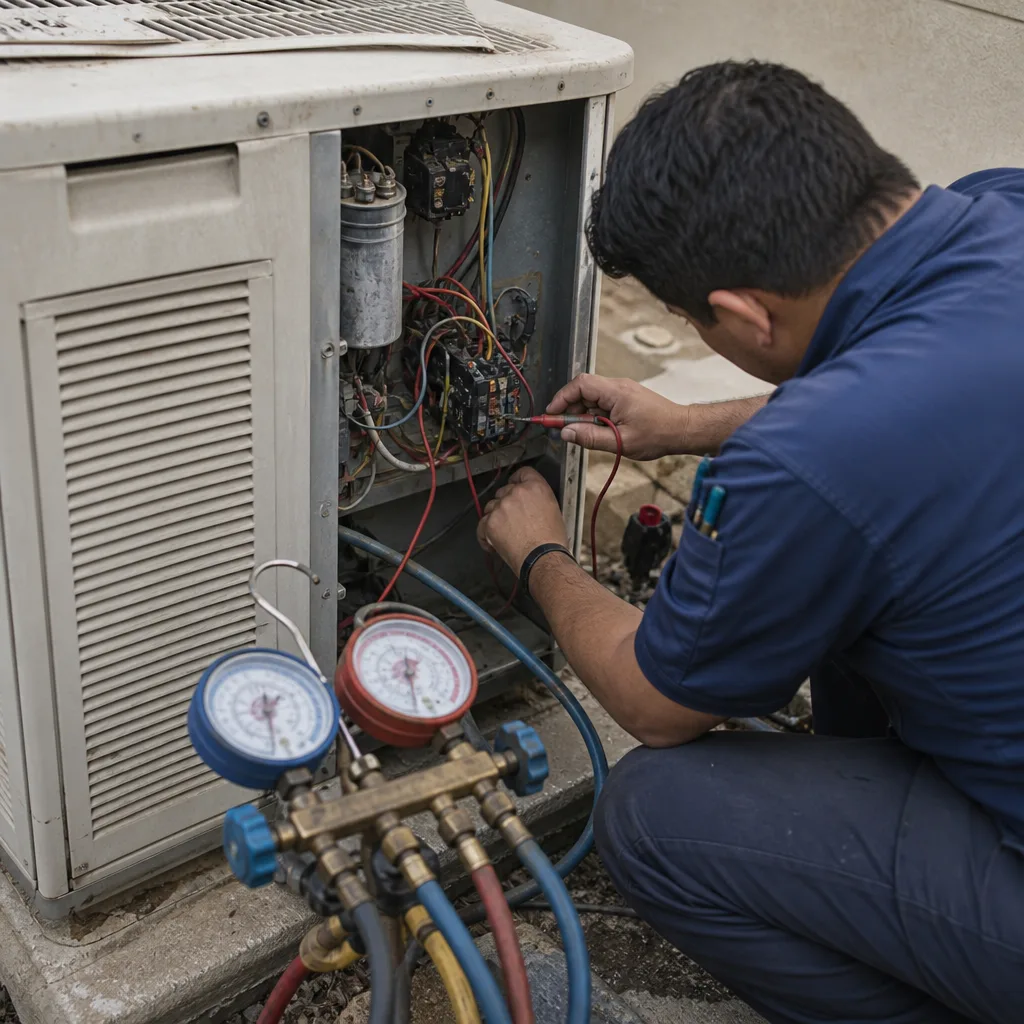 Before
 After
After Before
 After
After Before
 After
AfterWhen to Call a Professional
Some situations don’t wait for a vetting process. If your AC stops cooling during a Las Vegas heat wave and indoor temperatures climb past 90 degrees, if you smell burning from your furnace in winter, or if you hear grinding from your condenser unit, shut the system off and call a licensed professional immediately. Heat exhaustion is a real medical risk in Las Vegas summers, and a malfunctioning furnace is a carbon monoxide risk in winter. Halden Heating and Air Las Vegas offers free estimates in Las Vegas, and the office answers live 24/7. Call (725) 220-3488 and a real person picks up, not a voicemail tree. Even in an emergency, you can still ask for the license number and written price. Halden provides both on every call.
Frequently Asked Questions
Diagnostic visits typically run $50 to $100 in Las Vegas, while repairs range from $150 for minor parts like capacitors to $2,500 for compressor replacements; see our HVAC Cost Breakdown: The Las Vegas Homeowner’s Reference for 2026 for full details. Full system installations run between $7,500 and $14,000 depending on the brand and system size. Get a written estimate before approving any work. Call (725) 220-3488 for an exact quote on your specific system. Estimates are free.
Search the Nevada State Contractors Board license database at nscb.nv.gov using the company name or license number. Confirm the status reads “Active,” verify the expiration date is current, and open the full record to check that workers’ comp and liability insurance are on file. The entire process takes about four minutes.
Nevada does not require a C-21 HVAC contractor with no employees to carry workers’ comp. This means a solo operator working uninsured can become your legal liability if injured on your property. Always verify coverage before any technician climbs onto your roof or works inside your home.
No. Unpermitted HVAC work in Las Vegas can trigger insurance claim denials if a failure causes damage, and it becomes a negotiation point during resale inspections. A contractor who pulls the permit in their own name stands behind their work enough to attach their license to it. A contractor who skips the permit is telling you they don’t want the inspection.
Most AC repairs in Las Vegas fall between $150 and $500 depending on the part. Capacitor replacements run $150 to $250, condenser fan motors $300 to $550, and compressor replacements start around $1,200. If a quote lands far outside these ranges, ask for an itemized breakdown. For an exact quote on your unit, call (725) 220-3488.
A written estimate should include the contractor’s full legal name and license number, an itemized equipment list with model numbers, labor charges stated separately from equipment, permit fees, the total price including tax, start and completion dates, and warranty terms in writing. A one-paragraph number with no breakdown is not a real estimate.
The Bottom Line
Hiring an HVAC contractor in Las Vegas comes down to verification, not trust. Verify the license is active at nscb.nv.gov. Verify workers’ comp and liability insurance in the contractor’s name. Require a written estimate with itemized equipment, labor, permits, and warranty terms. Ask the 10-question phone script before you schedule, and walk away from any contractor who hedges on permits, insurance, or written pricing. Las Vegas has more than 400 licensed HVAC companies, so you never have to settle for one that won’t put the terms in writing. Andre Fuller built Halden Heating and Air Las Vegas on exactly that standard, with a written price before work starts and a written guarantee on every repair. Call (725) 220-3488 for a free estimate and a live arrival time you can track to your door.
Written by Andre Fuller, Owner at Halden Heating and Air Las Vegas, serving Las Vegas since 2004.